
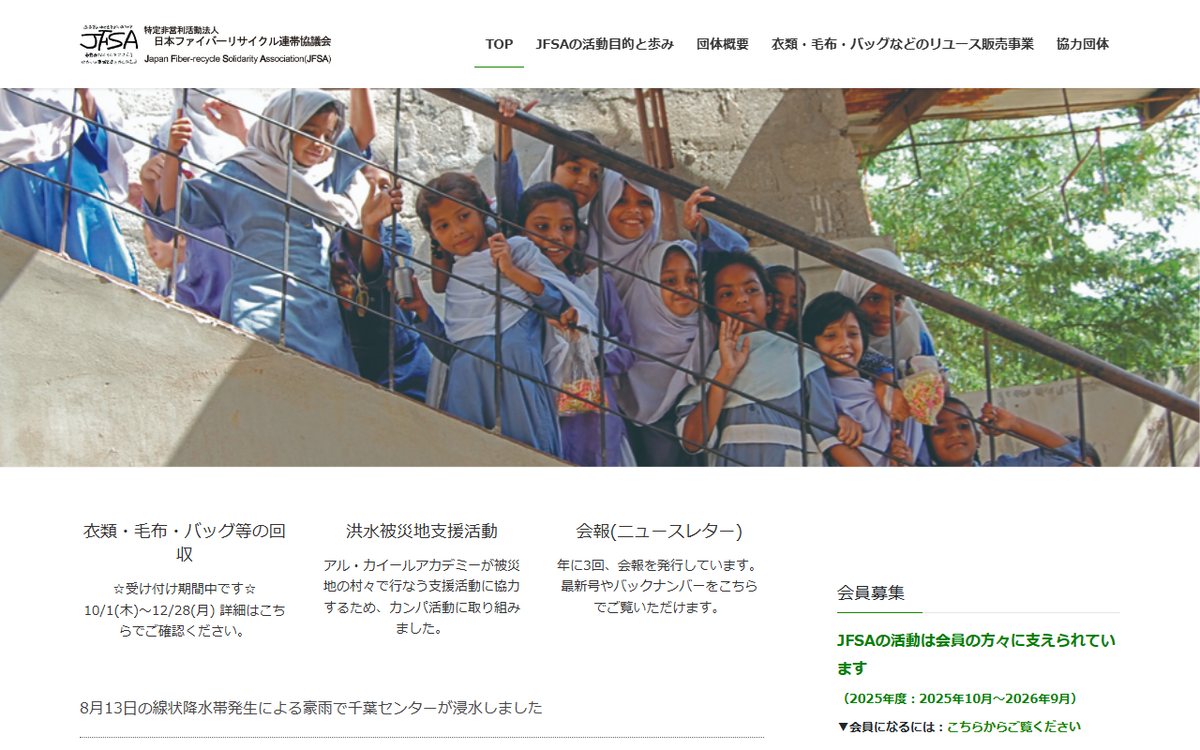
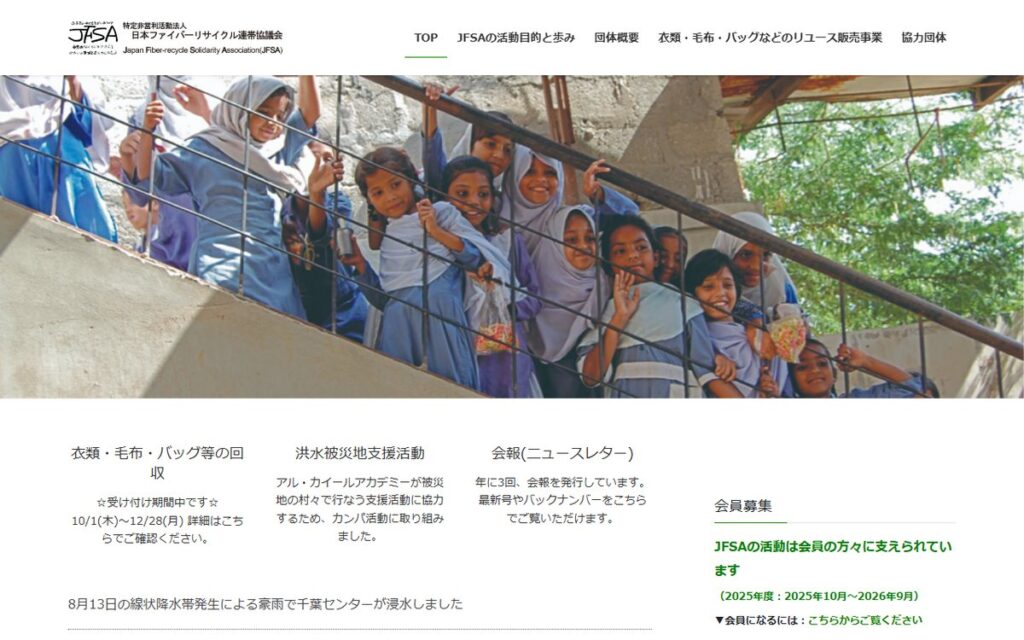
JFSA (Japan Fiber-Recycle Solidarity Association) is an NPO that collects clothes, blankets, bags, fabric and shoes and, through reuse sales, supports the independence of children living in slums in Pakistan. It has bases in Chiba City and Kashiwa City in Chiba Prefecture.
The mechanism is simple. Working with people in Pakistan, JFSA sells reused goods overseas and uses the profits for the running costs of Al-Khair Academy, a school in a slum. Profits from sales in Japan go toward JFSA's own activity costs. After floods in Pakistan, it also ran a fundraising drive to cooperate with the relief activities carried out by the Academy.
In fiscal 2024 (October 2024 to September 2025), it collected 129.9 tons from a total of 16,647 people. Shipments went out in 40-foot containers, twice to Thailand and four times to Pakistan. It publishes a newsletter three times a year and recruits members and volunteers.
Key points
- Household clothes, blankets and bags become running funds for a school in Pakistan
- In fiscal 2024, 129.9 tons were collected from a total of 16,647 people
- Several ways to get involved, including membership and volunteering
Why this organization's work stands out
It is easy to understand how collecting unused items at home directly leads to education support overseas. Figures such as the amount collected and the number of participants are published, giving a sense of the scale of the work.
Besides donating items, people can become members or volunteer, for example by sorting stamps or loading containers. Published financial and activity reports are also reassuring for those considering involvement.
Editor's comment
Knowing that clothes sleeping in your home can support children's learning in a faraway country, it seems possible to start international cooperation with a small, familiar step.
The collection periods and ways to take part are on the official website. Please take a look.