
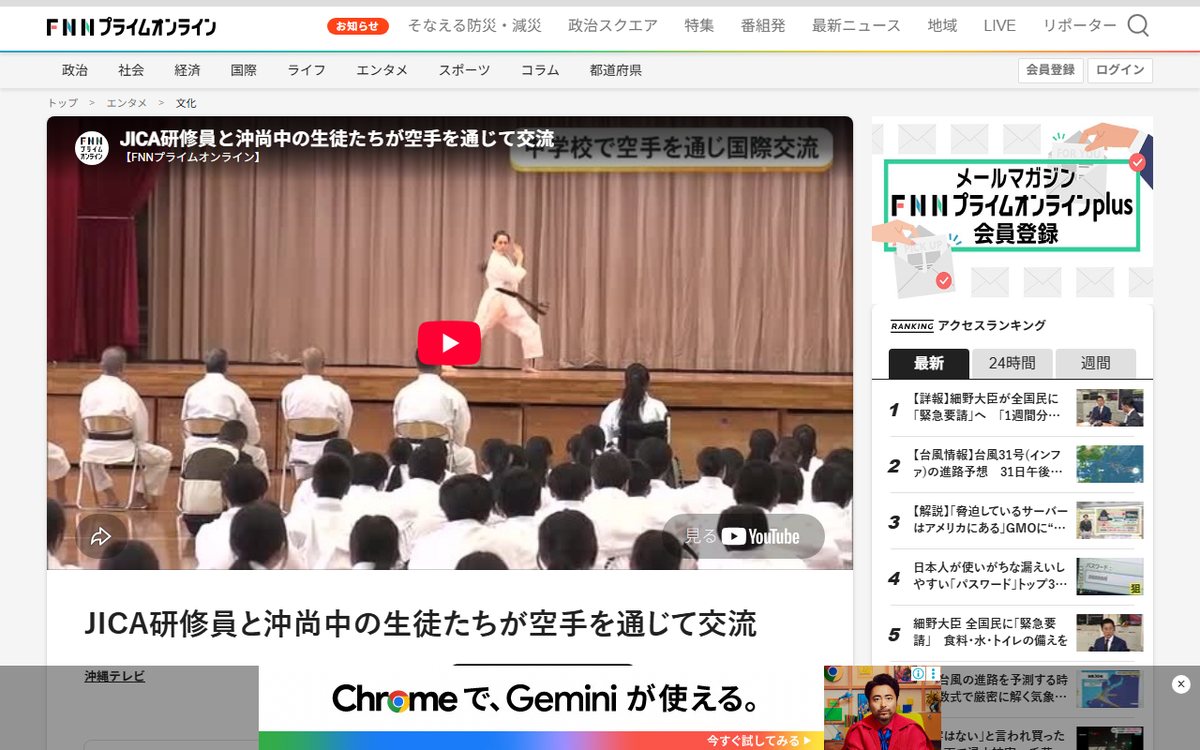
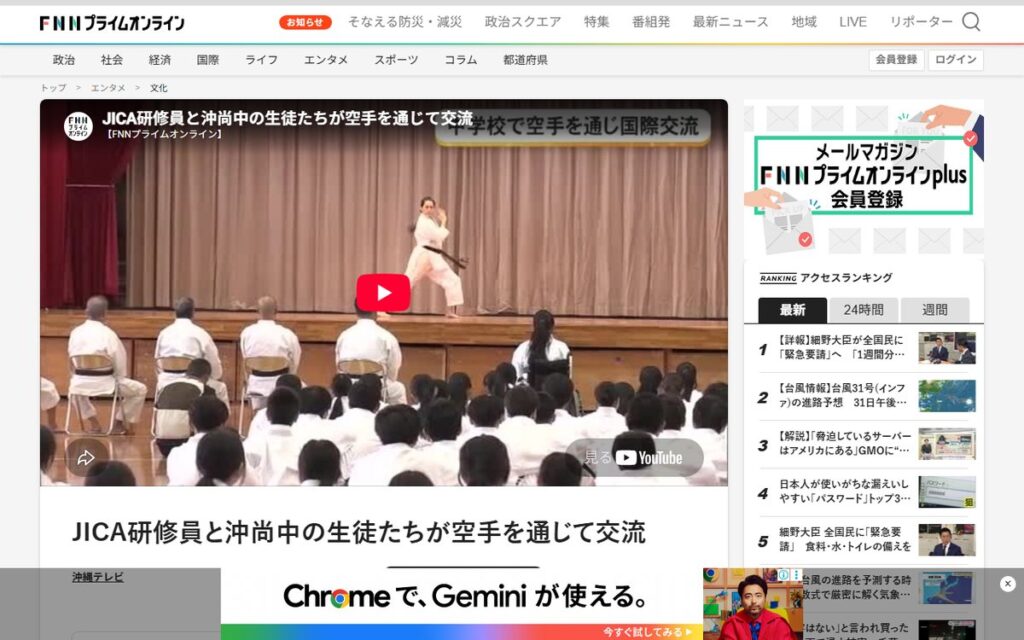
On October 28, 2026, trainees from overseas who are in Okinawa through a JICA program visited Okinawa Shogaku Junior High School in Naha. The visitors were five trainees from five Latin American countries, including Argentina and Brazil, and they spent time with 280 second-year students.
In Okinawa, the trainees are studying the techniques and history of traditional karate and the Okinawan culture behind it. On this day, each trainee talked about how they first encountered karate and about their activities in their home countries, and the students responded by performing the sanshin and eisa.
One trainee said that respecting others felt like an important part of Japanese culture and that this experience would deepen mutual respect. Students shared that they found it wonderful that everyone was doing the same thing even without a shared language, and that they wanted to spread the appeal of karate as part of Okinawan culture.
Key points
- Karate, born in Okinawa, became a common language linking Latin American trainees and local students
- The trainees shared how they met karate and what they do in their home countries
- Students performed the sanshin and eisa, making it a two-way cultural exchange
Why This News Deserves Attention
Karate is a culture that spread from Okinawa to the world. Meeting trainees who come to study it at its source can also help local students recognize the value of their own culture.
International cooperation often brings to mind work overseas, but welcoming trainees and holding exchanges at local schools is also an important way to connect countries and people.
Staff comments
Minato AobaResearch
“I was surprised to learn that trainees from five Latin American countries are studying not only the techniques of traditional karate in Okinawa but also its history and the culture behind it. Even with karate spread worldwide, learning at its source still means a lot.”

Sophie HiroseWriting and translation
“Aoba's point about learning at the source is so true. I loved the moment when the students responded with the sanshin and eisa. It became an exchange where both sides shared their own culture, not just one side teaching the other.”
Mako JozenjiProofreading and verification
“Listening to you both, I felt that culture is not a one-way street but something that travels back and forth. A student's comment that it was wonderful to do the same thing without a shared language really struck me. Experiences like this will likely stay with them for a long time.”
Editor-in-Chief’s comment
Ren DateEditor-in-Chief
“Even with different languages, you can sense how hearts connect through the same forms and movements. I hope the encounters in Okinawa stay with the trainees as lasting ties after they return home. Please take a look at the article to see the exchange.”