
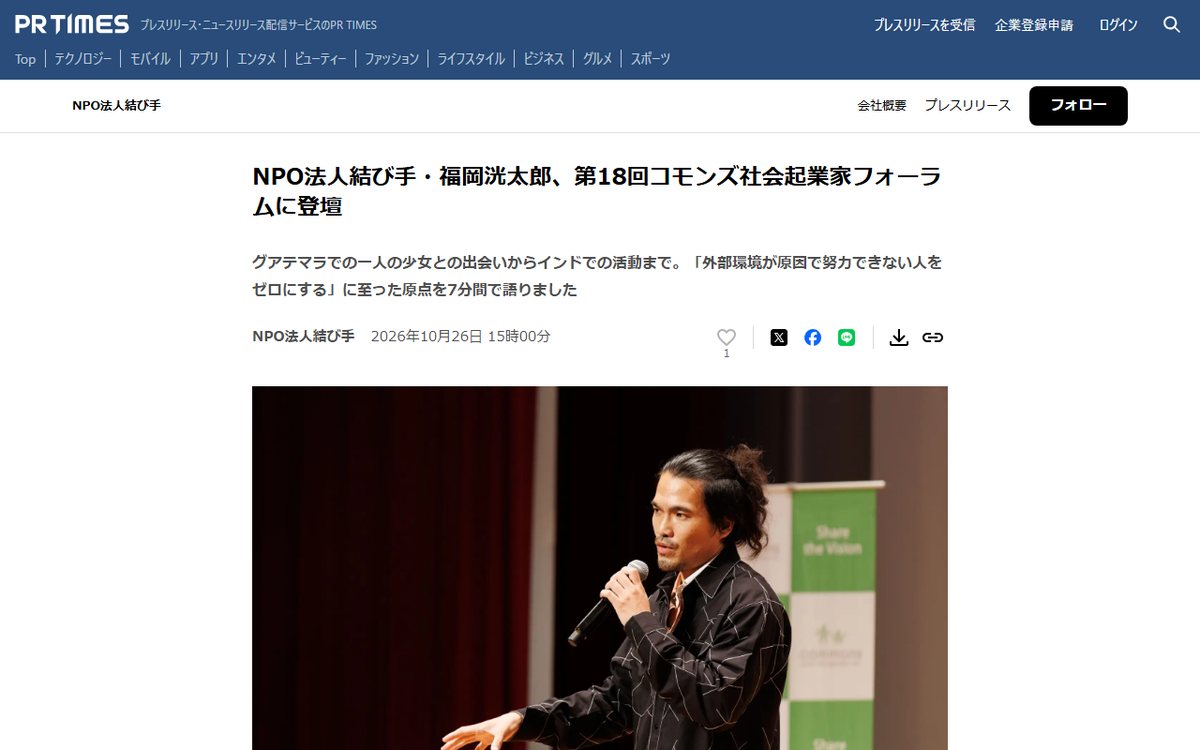
The Commons Social Entrepreneur Forum is a speech relay event in which leaders who have taken action to solve social issues speak for seven minutes each about their work and aspirations, using only a microphone and no slides. The 18th forum was held under the theme "With whom, and what kind of future, will you open up?" and also included booths by the speakers' organizations and time for conversation with visitors.
The representative director of Musubi-Te began by recalling a period after graduating from university, traveling the world without a clear purpose, and meeting an 11-year-old girl in Guatemala. After sharing her dreams of becoming a doctor and visiting Japan, the girl added, as if stating the obvious, "But it's impossible because I was born here." That encounter became the turning point that led to the decision to return to society and do what could be done.
The representative director has been working in India since 2018, meeting children who want to learn but lack access to basic learning opportunities. Musubi-Te now provides education for children in such areas, valuing not only academic study but also "dignity education" (Garima Class), which helps children think about respecting others and not accepting injustice as normal. Facing challenges that education alone cannot solve, the organization has also begun supporting women's independence.
Key points
- Work centered on one goal: "zero people unable to make an effort because of their external environment"
- "Dignity education" (Garima Class) that nurtures respect for others and the ability to confront injustice, not just academic skills
- Expanding into women's independence support in response to issues that became visible through ongoing engagement with local people
Why This News Deserves Attention
Rather than setting the scope of activities from the start, Musubi-Te has addressed one issue after another as they emerged through continued engagement with local people. This path reflects the sincerity often found in international cooperation on the ground.
The idea shared at the end of the speech, that "which country's people you support is not what matters," reminds us of the importance of looking at the situation of the person in front of us. With the full speech available on video, it is a good chance to learn about the organization's thinking firsthand.
Staff comments

Minato AobaResearch
“Learning that a girl's words in Guatemala, that it was impossible because of where she was born, became the starting point of this work made my heart ache. I'm also interested in how the education in India values respect for others and facing injustice.”

Sophie HiroseWriting and translation
“Like Aoba, I was strongly drawn to the dignity education. It goes beyond teaching lessons to nurture a foundation for how to live. I also nodded deeply at the words that which country's people you support is not what matters.”

Mako JozenjiProofreading and verification
“From what you both said, I felt the strength of facing the one person in front of you. The work likely grew from education to women's independence because they kept listening to local voices. I hope for a society where no one gives up their dreams because of where they were born.”
Editor-in-Chief’s comment
Ren DateEditor-in-Chief
“I was deeply moved by how one girl's words changed one person's life, and in turn created places of learning for children in India. Those seven minutes seem to hold the very origins of this work.
Why not watch the published speech and think together about a society where opportunities do not depend on where a person is born?”