
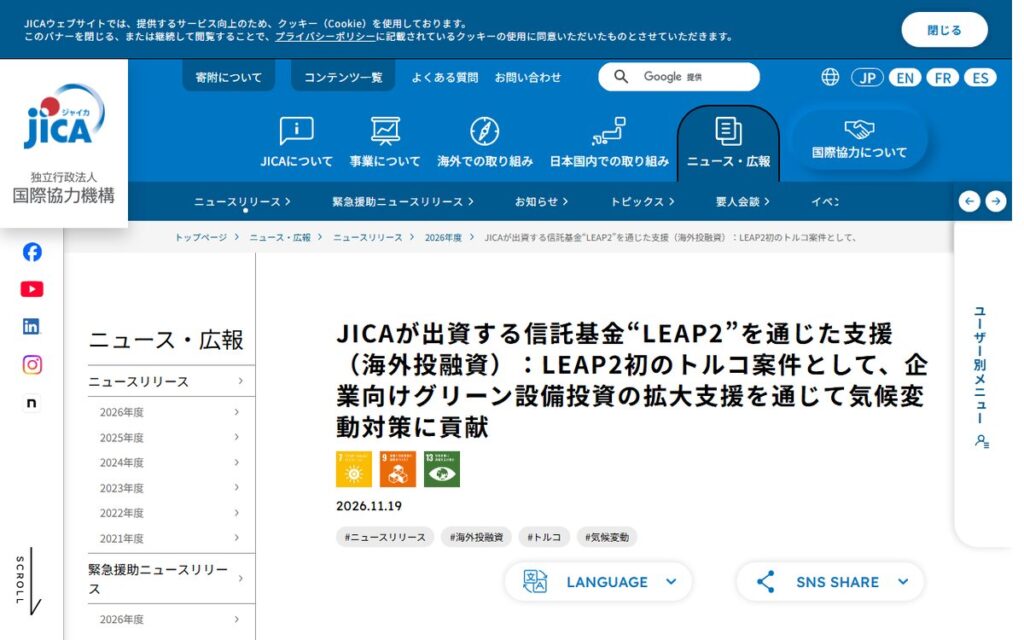
At the 31st UN Climate Change Conference (COP31) in Antalya, Türkiye, JICA announced support through LEAP2, a trust fund it finances. The Asian Development Bank (ADB) signed a loan agreement with AK Lease, a major Turkish leasing company. It is the first LEAP2 project in Türkiye, with up to US$50 million provided.
LEAP2 is a trust fund of up to US$1.5 billion that JICA invests in ADB, aimed at high-quality private-sector infrastructure in ADB's partner countries. Eligible projects include those that cut greenhouse gas emissions, improve energy efficiency, and provide affordable healthcare, education and communications services.
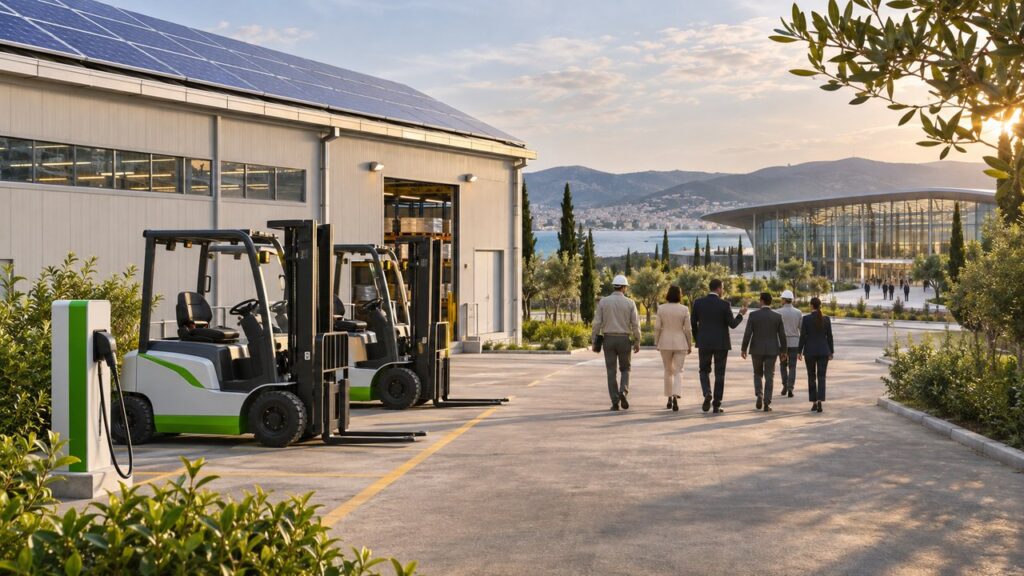
This project supports the expansion of AK Lease's green leasing business. Green leasing lets companies introduce equipment such as solar power systems and high-efficiency machinery without a large upfront investment. Demand for renewable energy and energy-saving investment is growing in Türkiye, but many companies, especially small and medium-sized ones, struggle to obtain long-term funding.
Key points
- Signed at COP31 — the first LEAP2 project in Türkiye
- Leasing lets companies adopt renewable and energy-saving equipment with a lower upfront burden
- Expected to spread decarbonization investment to small and medium-sized businesses with limited access to long-term funds
Why this news is worth noting
Climate action often brings to mind large power plants and international pledges, but this support focuses on the financial barrier companies face when installing equipment. By using a familiar mechanism like leasing, it lowers the hurdle to adoption.
It also shows how international cooperation funds work together with international institutions and private financial firms. It is a useful case for thinking about how to balance climate action and economic growth.
Staff comments

Minato AobaResearch
“What stood out is that it was signed at COP31. Rather than a big power plant, it looks at the money barrier companies face when installing equipment, which feels very close to the field.”

Sophie HiroseWriting and translation
“I agree with Aoba's point about the money barrier. Leasing lowers the upfront burden, so decarbonization could feel more personal, especially for small and medium-sized businesses.”

Mako JozenjiProofreading and verification
“Listening to you both, I feel climate action becomes far more real when tied to familiar mechanisms. If it helps Turkish companies take that first step, it is a lovely initiative.”
Editor-in-Chief’s comment
Ren DateEditor-in-Chief
“Many businesses want to install eco-friendly equipment, but the initial cost is heavy. The idea of answering that concern with leasing stayed with me.
The flow of money in international cooperation can seem complicated, but translating it into familiar mechanisms helps. If you are curious, please read JICA's announcement too.”