
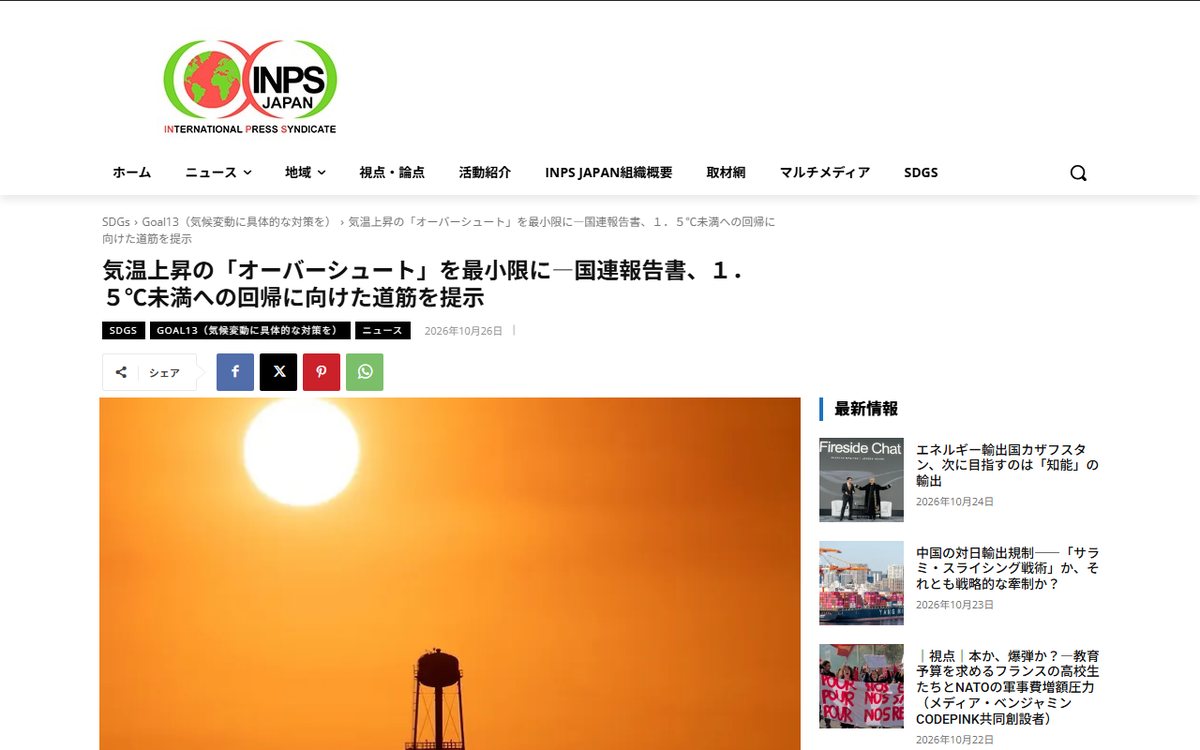
Global average warming is likely to exceed 1.5°C above pre-industrial levels within the next few years. Even so, the UNEP report says the Paris Agreement goal need not be abandoned: a pathway in which temperatures overshoot 1.5°C, peak, and then decline is the most promising option still available. Professor Richard Dawson of the Tyndall Centre for Climate Change Research at Newcastle University contributed to the report.
Achieving this requires deep and sustained cuts in greenhouse gas emissions starting immediately to keep the peak as low as possible, and, in the long run, turning emissions net negative. Carbon dioxide removal (CDR), through methods such as tree planting or technology, is one tool, but the report says it should complement emission cuts rather than replace them, and must be properly managed. Even in the most optimistic scenario, warming is projected to peak at 1.8°C.
The report warns that the larger and longer the overshoot, the greater the risk of irreversible changes such as ice sheet instability and the decline of the Amazon rainforest. It names strong political will, multilateral cooperation, adequate finance, and equity as conditions for success, and calls on countries with greater historical responsibility to act faster. It also stresses the importance of pursuing mitigation and adaptation together.
Key points
- Even after temporarily exceeding 1.5°C, a path remains to keep the peak low and return below it
- Net zero is not the finish line but a milestone on the way to net negative emissions
- Expected impacts include the submergence of small island developing states (SIDS) and low-lying coastal cities
Why This News Matters
At a time when some say 1.5°C is already out of reach, this report is significant for laying out how to come back after crossing it. It offers material for thinking about what to do next, rather than giving up.
The impacts of climate change weigh heavily on small island nations, coastal areas, and people forced to change how they make a living. The idea of building on equity and justice is an important perspective for all of us involved in international cooperation.
Staff comments

Minato AobaResearch
“Honestly, the figure that warming peaks at 1.8°C even in the most optimistic scenario startled me. Still, I find hope in the fact that the report lays out a path back below 1.5°C after the overshoot.”

Sophie HiroseWriting and translation
“I share the hope Aoba describes. Seeing net zero as a milestone rather than the finish line felt fresh to me. How a message is framed can turn people away from giving up and toward taking action.”

Mako JozenjiProofreading and verification
“I understand both your surprise at the numbers and your sense of hope. What stayed with me is the idea of fairness, that countries with greater responsibility should act faster. It is also a way of protecting life on island nations.”
Editor-in-Chief’s comment
Ren DateEditor-in-Chief
“There are many difficult numbers, but the report's message comes through clearly: there is still time, so let's act now.
The article summarizes the report carefully in Japanese, so we encourage you to read the original article as well.”