
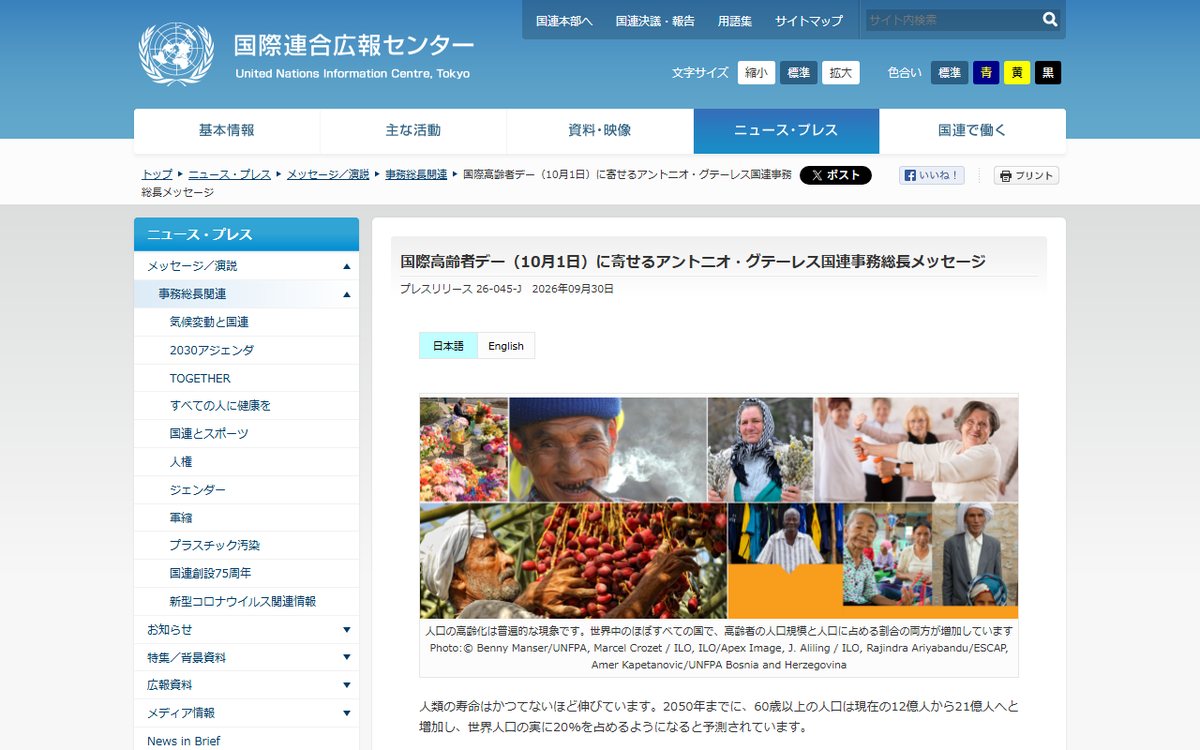
The United Nations Information Centre has published a Japanese translation of Secretary-General Guterres's message for the International Day of Older Persons on October 1.
According to the message, the population aged 60 and over is expected to grow from 1.2 billion today to 2.1 billion by 2050, making up 20% of the world's population. The Secretary-General calls this a great achievement of our time, while saying it brings both risks and opportunities that will reshape economies and societies.
While many people face anxiety about their lives, social isolation and discrimination as they age, the message says that with appropriate policies on employment, pensions, housing, health care, lifelong learning and more, people can continue to take part in society regardless of age. It describes older persons as people who support their families, communities and economies, and calls for solidarity between generations.
Key points
- The population aged 60 and over will reach 2.1 billion by 2050, 20% of the world's population
- A combination of policies, including employment, pensions, housing, health care and lifelong learning, is key
- A view of older persons not only as people to be supported but also as contributors
Why this news is worth your attention
Population aging is not only a Japanese issue; it is advancing in almost every country in the world. In international cooperation, too, building societies where everyone can live with dignity regardless of age is an important theme.
The message, which positions older persons not only as "recipients of support" but also as leaders who sustain their communities and families, may also offer hints for thinking about our own everyday lives.
Editor's comment
A society where living longer goes hand in hand with peace of mind is reassuring for people of every generation.
Why not take this opportunity to reflect a little on how you relate to the older people around you?