
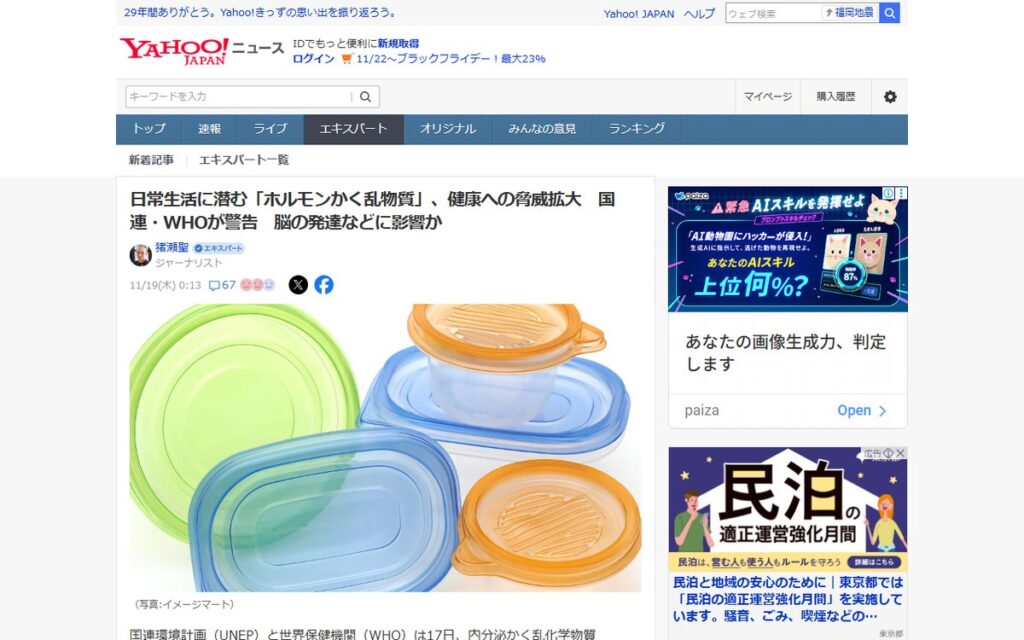
On November 17, UNEP and WHO released a report on endocrine-disrupting chemicals (EDCs). EDCs are man-made chemicals that act on hormones in the body and are said to be found in food containers, cookware, cosmetics, toys and clothing. The report points out that such products are increasing rapidly and that threats to health and the natural environment are growing.
The report says strong evidence has been found linking EDCs to diseases involving reproduction, brain development, nerve function, hormone regulation such as the thyroid, metabolism, immunity and the cardiovascular system. Effects on fetuses and infants are of particular concern. Links to impaired reproduction and development have also been shown in wildlife such as fish and birds.
The EU decided in December 2024 to ban bisphenol A in food packaging, effective January 2025. However, the report considers regulating individual substances insufficient and calls on regulators and industry to cooperate and quickly draw up measures.
According to the article, in Japan the Food Safety Commission is currently discussing the health risks of bisphenol A.
Key points
- Organizes how familiar products may affect both people and the natural environment
- Effects on fetuses and infants are of special concern
- Calls for cooperation among countries and industry, beyond regulating individual substances
Why This News Deserves Attention
Chemical issues are a global challenge touching lives everywhere, not just in one country. It is an important milestone that UN agencies compiled the latest science and called on countries to act.
It also relates to products we use every day. Knowing accurate information first and watching what measures society takes is a useful starting point.
Staff comments

Minato AobaResearch
“What stood out was that this is about very familiar things like food containers, cosmetics and toys. I keep thinking about the concern over effects on fetuses and infants in particular.”

Sophie HiroseWriting and translation
“I share Aoba's worry about children. It also points to effects on fish and birds, not just people, which made me feel this is truly a global issue.”

Mako JozenjiProofreading and verification
“As you both say, this is close to home and global at once. Reading it quietly made me think both our own everyday choices and cooperation among countries are needed.”
Editor-in-Chief’s comment
Ren DateEditor-in-Chief
“Although it is a matter of everyday life, I felt it is also a challenge the whole world must face. Let's use this UN report as a chance to think about how we live with chemicals.
What about the products around you concerns you? Please talk about it with the people around you.”