
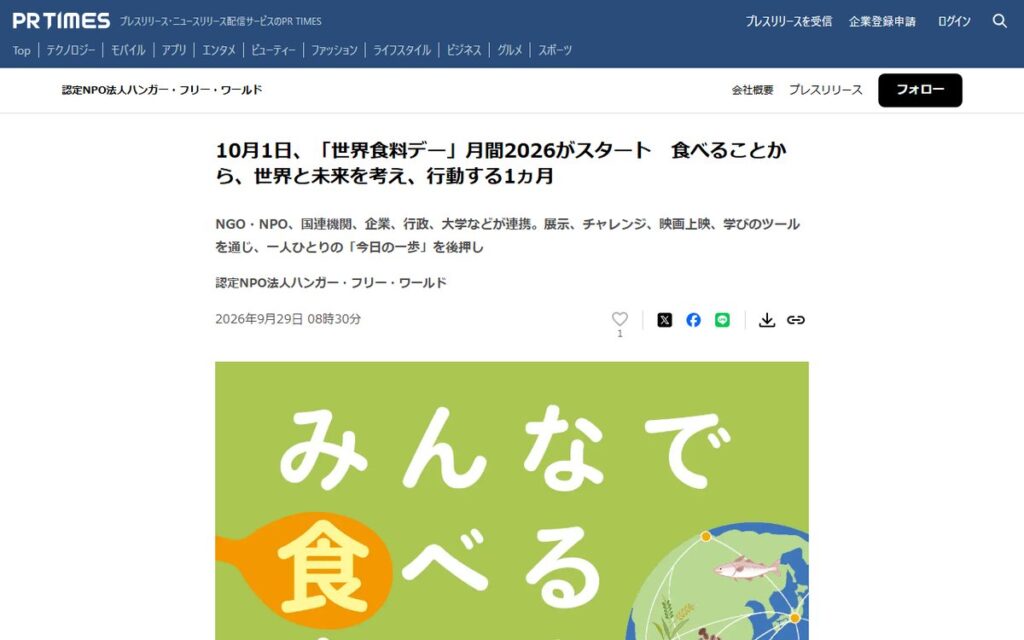
October 16 is World Food Day, designated by the United Nations. In Japan, since 2008, October has been observed as World Food Day Month, expanding opportunities to think and act on hunger and food issues. In 2026 as well, it runs from October 1 to 31, with 45 organizations taking part, including NGOs and NPOs, UN agencies, companies, local governments, universities and youth groups, at the call of the certified NPO Hunger Free World and the specified nonprofit organization Africa Japan Forum.
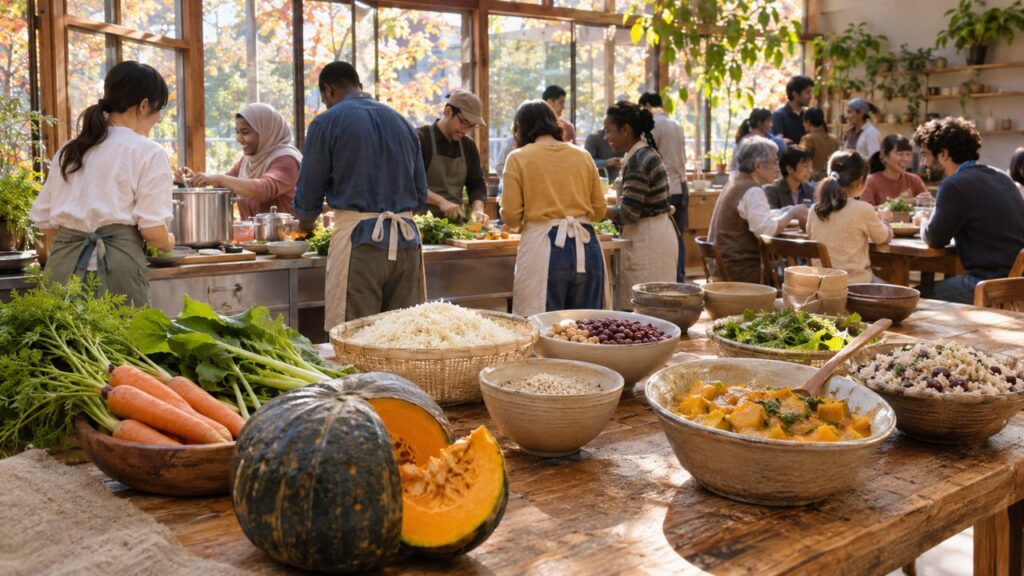
This year, rather than leaving food problems to individual effort alone, the campaign treats them as issues of the whole "food system," in which the production, processing, distribution, consumption and disposal of food are linked with the environment, the economy and policy, and proposes actions that can start from the way we eat and choose food in daily life.
Examples of activities introduced include a panel exhibition at Meiji Gakuin University's Yokohama Campus presenting the work of 12 organizations including UN agencies and NGOs (through October 9), the "Nokosan Gohan Challenge," which collects ideas for finishing up ingredients at home deliciously (through October 8), a screening campaign for the film "Mottainai Kitchen," and "Yoru Pan Cafe" events that take in and sell bread that would otherwise go unsold.
Key points
- A month-long campaign in which 45 organizations including NGOs, UN agencies, companies and universities collaborate
- Treats food issues as challenges of the whole "food system" and proposes everyday actions
- Many easy-to-join activities, including panel exhibitions, a challenge for recipes that use up ingredients, and film screenings
Why we are paying attention to this campaign
Even today many people around the world suffer from hunger, while large amounts of edible food are thrown away. What we eat every day is deeply connected to the lives of producers in faraway countries, to climate change and to the environment.
This campaign shows that, besides "donating" or "going to the field," we can take part in international cooperation by changing a little how we eat and buy. It can also prompt conversations about food at school, at work and at home.
Staff comments

Minato AobaResearch
“I was drawn to the scale of 45 groups working together to think about food over the whole month of October. I also really like that there are so many easy ways to join, like a panel exhibition and the night bread cafe.”

Sophie HiroseWriting and translation
“I agree that it is easy to join, Aoba. The message that you can take part in international cooperation through how you eat and choose food, not only through donations or travel, felt very close to home and stayed with me.”

Mako JozenjiProofreading and verification
“Hearing you both, knowing that each daily plate connects to someone's life somewhere in the world made eating feel a little special. I would like to start by simply savoring today's meal with care.”
Editor-in-Chief’s comment
Ren DateEditor-in-Chief
“I really liked that there are activities that let you reduce food waste while having fun, such as decorating an omelet rice like a character or grating curry roux to use it up. The appeal of this month is that you do not have to think too hard and can start with "today's plate."
You can find participating organizations' activities and the latest event information in Hunger Free World's announcement and the official information for World Food Day Month. Ahead of World Food Day on October 16, please try at least one action.”