
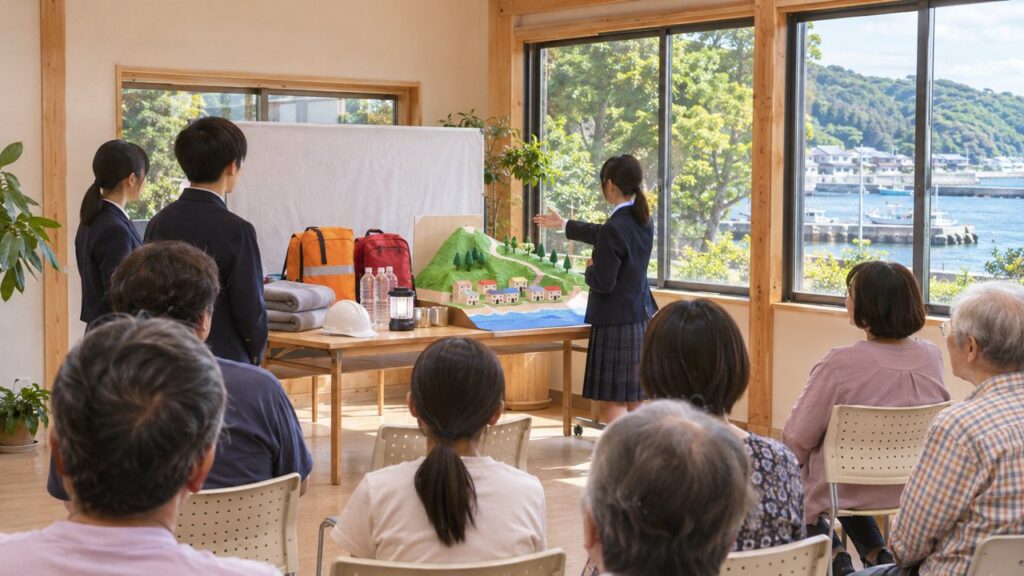
Kamakura City runs the "Disaster Prevention Learning Program 2026" to help students learn the lessons of the earthquake and the progress of recovery, and to nurture people who will lead local disaster prevention. A report session on the program's study tour will be held on October 24.
The participating students visited disaster-hit areas, including Ishinomaki in Miyagi and Rikuzentakata in Iwate, on a three-day, two-night trip from August 5 to 7. They toured disaster remains, exchanged ideas with local junior high students and took part in workshops, with learning sessions before and after the trip.
At the event, after an overview of the program, six students will give presentations including a disaster-prevention workshop. It is a student-led, participatory session where attendees think together about what they can do now for the future disaster prevention of Kamakura.
Key points
- Oct 24 (Sat), 10:00–12:00 at Yuigahama Junior High. Free, first 50 attendees
- Presentations by six students after visiting disaster remains and meeting local students
- Includes a disaster-prevention workshop; open to all (advance registration required)
Why we recommend this event
Fifteen years after the Great East Japan Earthquake, it is a valuable chance to hear the next generation share what they saw in their own words.
Because the workshop involves attendees too, it can also be an opportunity for families to talk about local disaster prevention.
Staff comments
Minato AobaResearch
“Fifteen years after the disaster, middle schoolers are linking what they learned in Ishinomaki and Rikuzentakata to disaster prevention in Kamakura. Lessons from other regions becoming local preparedness is a good cycle.”

Sophie HiroseWriting and translation
“That cycle of lessons becoming local preparedness is right, Aoba. Students explaining in their own words should give adults new insight, and the workshop could start a family conversation.”

Mako JozenjiProofreading and verification
“At the center of the cycle you both describe, I feel, are the students' own words. Hearing plainly what they felt at the disaster sites is precious, and it makes us listeners sit up straight. Adults seem likely to learn a lot as well.”
Editor-in-Chief's comment
Ren DateEditor-in-Chief
“Bringing what was learned on a study tour back to the community is a wonderful effort.
Capacity is limited to the first 50 and advance registration is required. Please check Kamakura City's announcement for how to apply, and go listen to the students' voices.”