
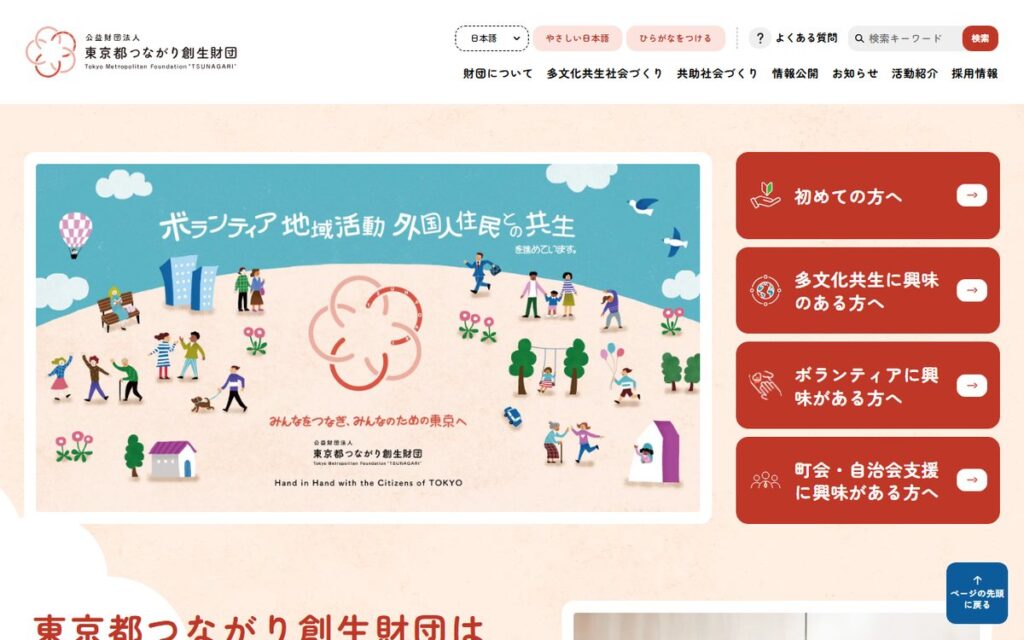
The Tokyo Tsunagari Sosei Foundation is a public interest incorporated foundation established by the Tokyo Metropolitan Government on October 1, 2020 to connect people, the source of Tokyo's vitality, and to support the revitalization of local communities. Its work rests on two pillars: building a multicultural society and building a mutual-support society.
In multicultural coexistence, it works with municipalities and support organizations on consultation for foreign residents, information for residents from abroad, community Japanese-language education, support for multicultural children, promotion of Plain Japanese, and preparing support systems for foreign residents during disasters. It reports 4,258 consultations at its counter for foreign residents in fiscal 2025.
For the mutual-support society, it carries on the legacy of the Tokyo 2020 Games by sharing the appeal of volunteering and information on activities, and supports neighborhood and residents' associations together with municipalities. As of fiscal 2025, it reports 15,420 registered users of the Tokyo Volunteer Legacy Network and 370 cumulative cases of support for neighborhood associations.
Key points
- Efforts to help foreign residents live with peace of mind, including consultation, Japanese-language learning support and the spread of Plain Japanese
- Information that makes volunteering approachable even for first-timers, including calls for participants in volunteer experiences
- Support, together with municipalities, for neighborhood associations facing issues such as a shortage of people to carry on their work
Why this organization deserves attention
The foundation explains that the number of foreign residents in Tokyo has grown greatly and their nationalities have become more diverse. Against that background, it offers a wide range of support suited to daily life, such as consultation, Japanese-language learning, Plain Japanese and disaster preparedness.
It also puts effort into volunteering information and support for neighborhood associations. With several ways in for people of any nationality or age to take part as members of the community, it offers hints for thinking about local ties close to home.
Staff comments
Minato AobaResearch
“What stood out to me is how the support follows real daily life, from consultations for foreign residents to Easy Japanese. I am also curious about the volunteer and neighborhood association support.”
Sophie HiroseWriting and translation
“I agree with Aoba about support that follows daily life. Since it runs from consultation desks to disaster preparedness, it feels like a reassuring entry point close to where people live. I think it is a place people can rely on with peace of mind.”
Mako JozenjiProofreading and verification
“Listening to you both, I thought about what it means that multicultural coexistence and volunteering sit together in one foundation. I hope getting to know our neighbors helps make communities warmer.”
Editor-in-Chief’s comment
Ren DateEditor-in-Chief
“Learning the language and culture of the people living next door, and helping to support local events together, both seem to be important steps toward making a town a little warmer. The Plain Japanese articles the foundation publishes are worth reading for the discoveries alone.
The official website also lists calls for volunteer-experience participants and newsletters. Why not take a look at an activity that catches your interest?”