
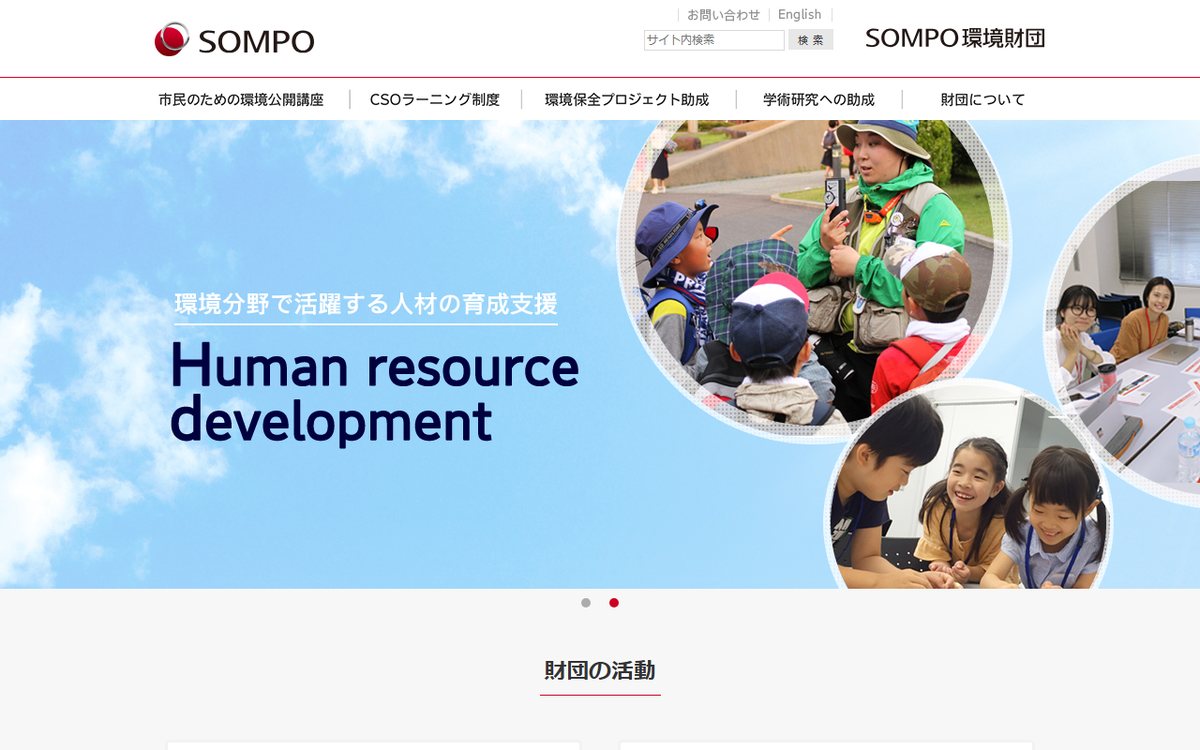
The Sompo Environment Foundation is a public interest foundation whose aim is to contribute to environmental conservation by developing people and supporting activities and research. It trains people active in environmental conservation, collects and provides information and raises awareness about the environment, and offers grants to organizations and individuals who take action.
For human resource development, it runs the "CSO Learning" program, in which university and graduate students gain internship experience at CSOs (civil society organizations, a concept that includes NPOs and NGOs) in the environmental field. For the general public, it holds online "Public Environmental Lectures for Citizens" in collaboration with Sompo Holdings and the Japan Environmental Education Forum.
Its grants have two pillars: funding for environmental conservation projects by NPOs, NGOs and voluntary groups working on environmental problems (applications for fiscal 2026 are currently open), and grants toward the costs of writing doctoral dissertations in the humanities and social sciences on environmental themes (academic research grants). Its blog also shares reports from regional meetings and lectures.
Key points
- The "CSO Learning" program offering internships at CSOs in the environmental field
- "Public Environmental Lectures for Citizens," free online lectures anyone can join
- Two grant programs: environmental conservation projects and academic research
Why this organization deserves attention
Its distinguishing feature is that besides grants, it also offers a program in which younger people learn in the field and lectures that citizens can easily attend. It appears to treat developing people as an important pillar of environmental conservation.
Its blog carefully introduces the camps and regular meetings of the participating student interns. It is useful for people who want to work in the environmental field and for organizations looking for grants that support NPO operations.
Editor's comment
You may be concerned about environmental problems but not know where to start. For such readers, free public lectures could be a good way in.
Calls for grant applications and lecture sign-ups are announced in the news section of the official website. Why not start with a theme that interests you?