
OISCA is an NGO that aims at "nation-building and people-building through agriculture," working in rural development, human resource development, environmental conservation and awareness-raising in Asia-Pacific countries. The foundation of its work is developing people, through the practice of recycling-oriented agriculture, to be individuals who act for coexistence with local communities and the world.
OISCA International was founded in 1961 and is an international NGO headquartered in Japan, working in 41 countries and regions. The foundation in Japan was created in 1969 as the body that puts its philosophy into concrete action. Young people from many countries learn agricultural skills at its training centers, then return home to work on rural development as local leaders.
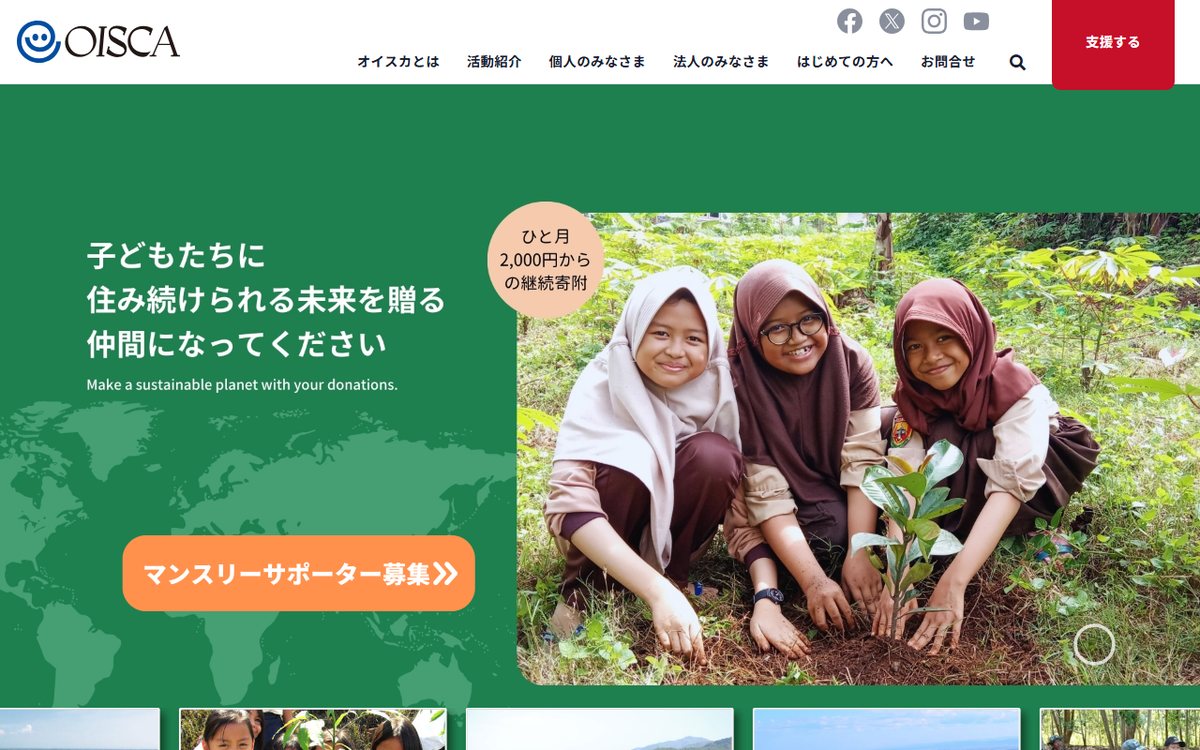
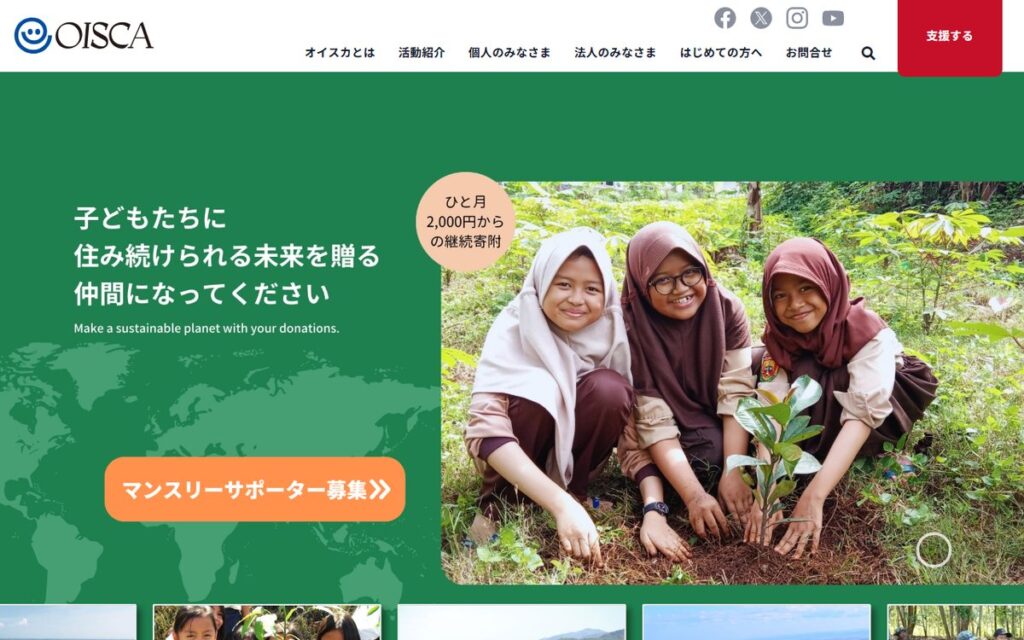
In environmental conservation, its website introduces a variety of projects: mangrove planting in Thailand and Indonesia, desertification prevention in Uzbekistan, restoration of about 100 hectares of coastal forest in Natori, Miyagi Prefecture, and the Children's Forest program, in which children themselves plant and raise seedlings at their schools. The site also shows figures such as 23,500 hectares of planted area.
Key points
- Built on people development, with training alumni carrying on the work locally
- Environmental projects in various places, such as mangrove planting and coastal forest restoration
- The Children's Forest program, where children plant and raise seedlings
Why this organization deserves attention
Rather than only delivering technology and funds, it emphasizes a system in which young people from the field learn and return to their communities as leaders. The idea that trained people carry on the work even after a project ends is striking.
Alongside overseas projects, it also works in Japan, through its domestic training centers and the restoration of coastal forests after the Great East Japan Earthquake. Individuals and organizations alike can take part, and there are many ways to get involved, such as study tours, events, volunteering and internships.
Editor's comment
Planting trees is work whose results are slow to appear, but the sight of children raising seedlings together and watching them grow into a forest gives a sense of hope for the future.
If you are curious, why not look at the event and study tour information on the official website?