
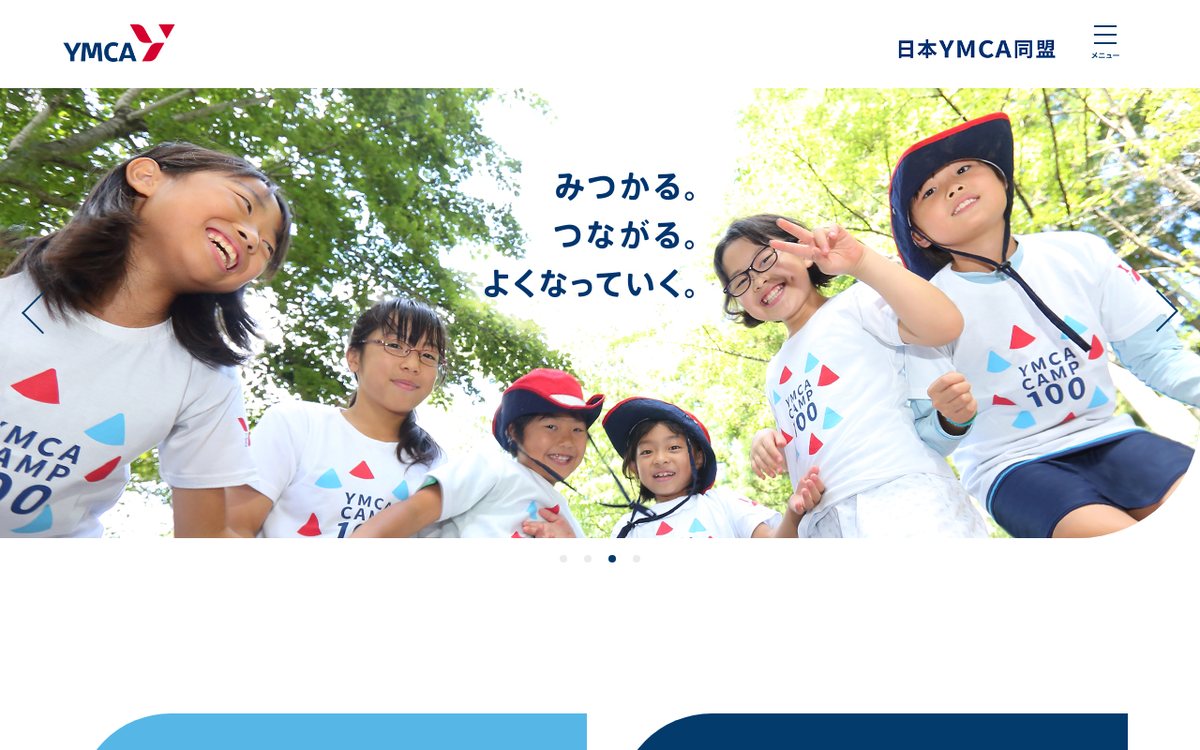
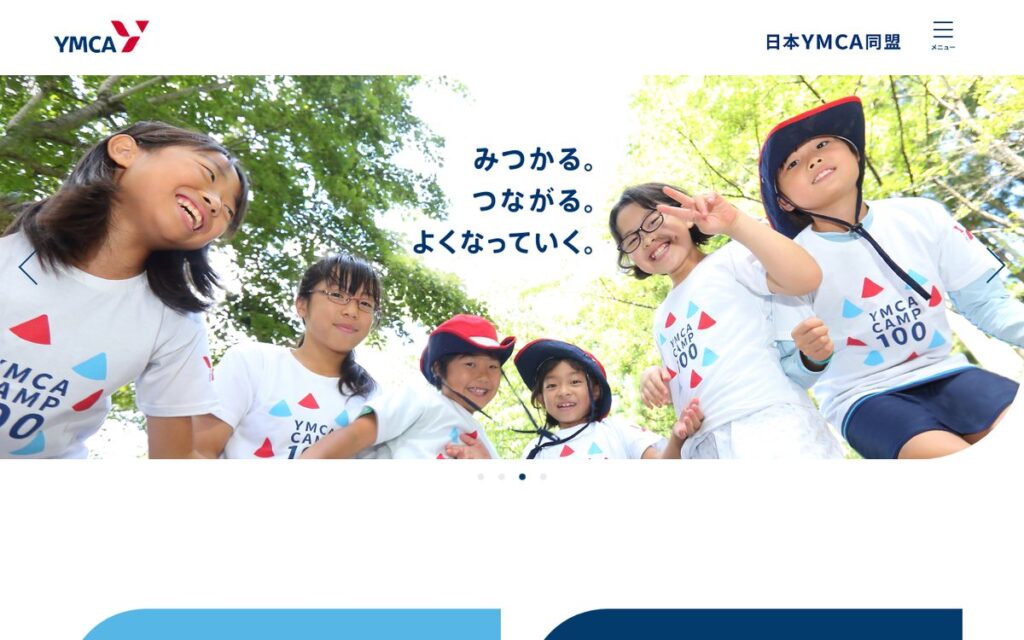
The YMCA was founded in 1844 in London, England, during the Industrial Revolution, out of a wish for the rich growth of young people. Today it has spread to 120 countries and areas, a nonprofit organization in which about 65 million people take part. In Japan it was established in Tokyo in 1880 (Meiji 13), and about 140,000 people are active in 34 city YMCAs and 35 student YMCAs.
The National Council of YMCAs of Japan is organized by the membership of city YMCAs and student YMCAs nationwide, and its main activity is coordination with YMCAs in Japan and overseas. Under the slogan "Encounter. Connect. Keep improving," YMCAs across the country offer language education, wellness, outdoor activities and educational camps, nurseries, kindergartens and early childhood centers (about 80 locations nationwide), after-school care (about 50 locations), vocational schools (about 20 schools), developmental support (35 locations), support for older adults and more.
For social issues, it works on disaster relief, international cooperation and understanding, and youth empowerment that supports people aged 18 to 35. The website introduces support for evacuees from Ukraine, refresh camps for children from areas hit by the 2026 Kumamoto earthquake and the Noto disasters, and an emergency fund for the Nepal floods.
Key points
- A YMCA network spanning 120 countries and areas, with 34 city YMCAs and 35 student YMCAs in Japan
- A wide range of programs close to daily life, including child care, after-school care, languages, sports, camps and vocational schools
- Activities that face social issues, such as disaster relief, international cooperation and youth empowerment
Why this organization deserves attention
It stands out for rooting programs in communities across the country that people can join at many stages of life, from children to older adults. A nearby classroom or facility becomes a place to connect with society.
In the message from its leaders, it says that, grounded in the Bible verse "Love your neighbor as yourself," it aims at a society that protects each person's dignity and shares hope. In disaster relief and international cooperation as well, local YMCAs and the worldwide network make their strengths felt.
Editor's comment
Many of you may have come across the YMCA name in familiar places such as swimming lessons, camps and nurseries. Knowing that behind it lies a large circle connected to the world, and activities that face social issues, changes how it looks a little.
Volunteers are also welcome at YMCAs in your area. Why not look for a YMCA near you on the official website?