
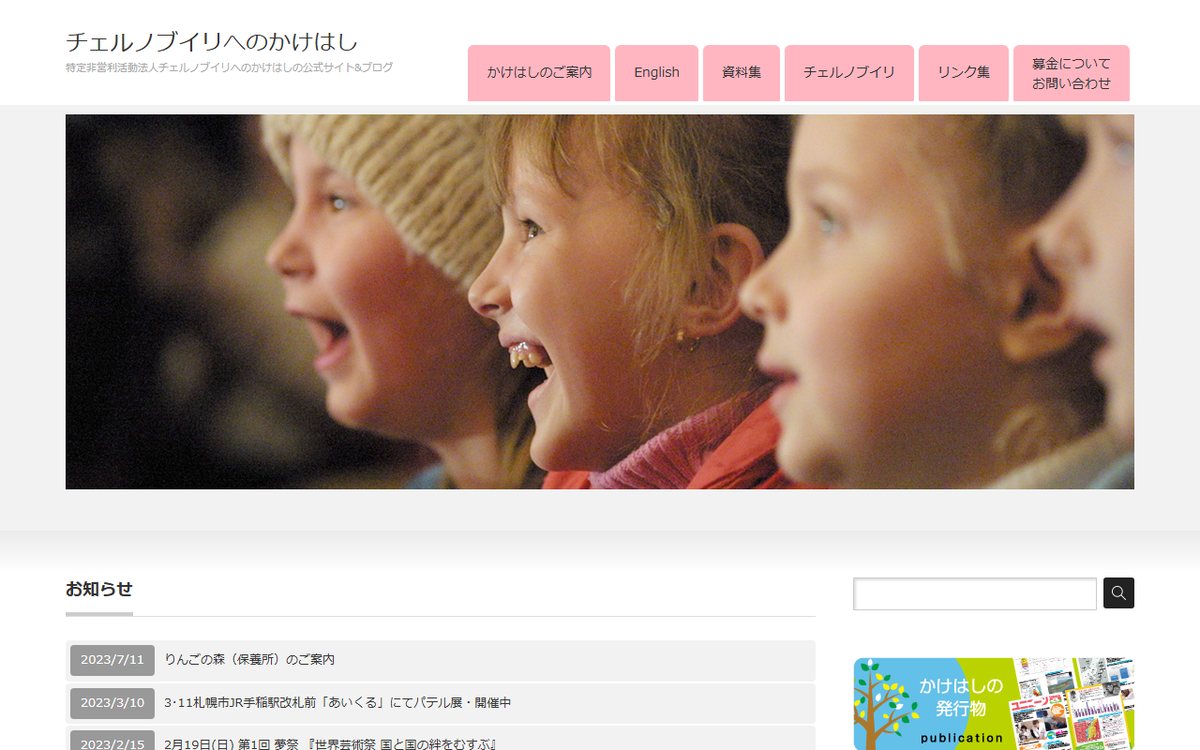
Kakehashi (Bridge) to Chernobyl is an NPO founded in Sapporo in April 1992, mainly by a group of housewives. It has run a recuperation foster-host movement that invites children from areas affected by the 1986 Chernobyl nuclear disaster to Japan to spend time in uncontaminated surroundings. All of its funding comes from donations.
Between 1992 and 2010, 648 children from Belarus came to Japan for recuperation. Since 2011 the organization has no longer been able to invite Belarusian children to Japan, and it continues to provide financial support to NGOs there.
In 2011 it amended its statute to include victims of any nuclear-related disaster. Following the Fukushima Daiichi nuclear disaster, it has held medical consultations led by a doctor, recuperation for mothers and children, lectures and publication of materials. It also carries out cultural exchange, such as performances in Belarus by the cultural exchange troupe "Manjushaka."
Key points
- Recuperation in Japan for 648 children between 1992 and 2010
- Citizen-led operation funded by bazaars and donations
- Wide-ranging activities, from cultural exchange performances in Belarus to recuperation and consultation for affected people in Japan
Why this organization's work stands out
Having supported children's recuperation through citizens' efforts for more than 30 years, it shows that international cooperation is a long-term commitment rather than a one-off effort.
Even after the form of support for Belarus changed, it expanded its work to support affected people in Japan, which is a useful example of reviewing one's role as circumstances change.
Editor's comment
It made me feel the real strength of citizen-led international cooperation to learn that an effort begun by housewives has continued for over 30 years.
The history of its activities, materials and blog are available on the official website. Please take a look.