

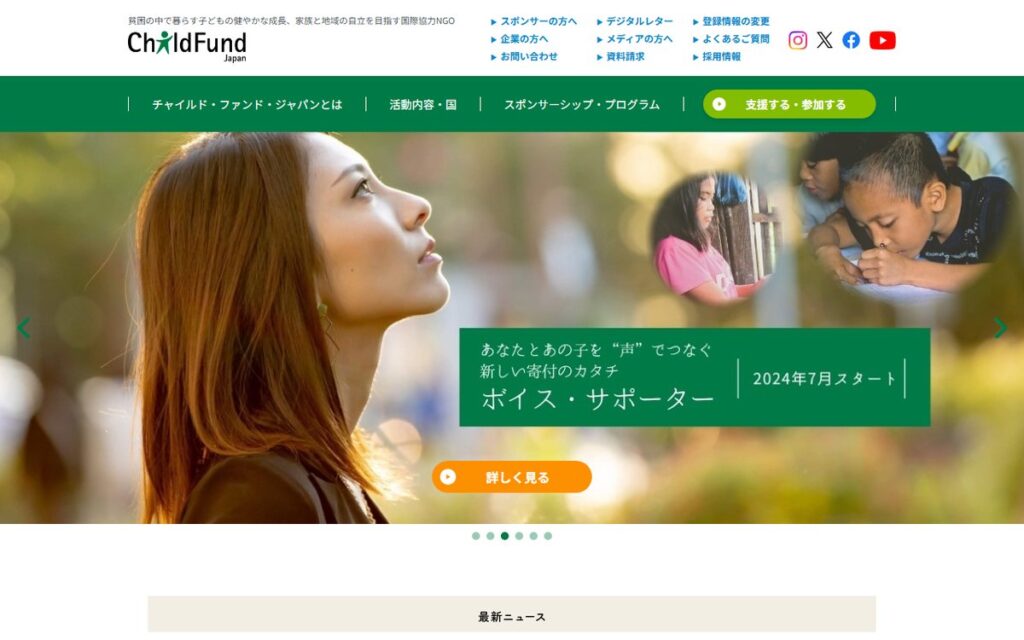
Child Fund Japan traces its origins to the postwar period, when it supported Japanese war orphans with funding from overseas. In 1975 it resolved that "just as people overseas helped Japanese children, now we will support children overseas," and turned to supporting children in developing countries. This "paying it forward" is how the organization began, and it marked its 50th anniversary in 2025.
Today it supports about 25,000 children a year, mainly in the Philippines, Nepal and Sri Lanka. Its work includes community development support that backs whole communities through education, nutrition, health and protecting children from violence; emergency and recovery support for victims of natural disasters and conflict; and awareness-raising in Japan. It reports that in the Philippine province of Western Negros the high school graduation rate reached 99% over ten years, and that 47 communities have become independent of support.
Ways to take part include the Sponsorship Program, which connects you with one child in a community through letters and records of growth (from 130 yen a day), Voice Supporter from 1,000 yen a month, and Monthly Supporter for the organization as a whole. It also accepts unused postcards and stamps, used books, DVDs and games, as well as volunteers and interns.
Key points
- Has supported children and communities in developing countries for 50 years since 1975
- A 99% high school graduation rate over ten years in Western Negros, Philippines, and 47 communities that became independent of support
- Many ways to take part, including the Sponsorship Program, which lets you follow a child through letters and records of growth
Why this organization deserves attention
A distinctive feature is that it values "international cooperation in which both sides feel a sense of purpose, beyond the roles of giver and receiver." It provides continuing support aimed not only at children's growth but at the independence of their communities.
It offers easy ways in, such as a system that connects you one-to-one with a child, support that can start with a small amount, and donations of unused postcards or used books.
Editor's comment
Those who received help from overseas after the war have, over time, become those who help. The phrase "paying it forward" feels like a view of the origin of international cooperation.
The official website has stories of children in the field and activity reports. Why not start by reading one child's story?