
The Asian Rural Institute (ARI; Ajia Gakuin in Japanese) is a school corporation in Nasushiobara, Tochigi Prefecture. Its predecessor was the Southeast Asia Course set up in the 1960s at the Rural Mission Theological Seminary in Tokyo, and it became independent and was founded at its present site in 1973. The school was born out of remorse over Japanese churches' cooperation with the war, and its motto is "That We May Live Together."
Each year it welcomes about 30 "participants" from roughly 15 countries. They are community leaders who have belonged for five years or more to organizations working for rural communities facing poverty and other challenges. In nine months of training they gain new knowledge, skills and values, and return home with the long-term goals of their communities in mind. They are required to keep working for their organizations for at least three years after returning, a system that makes sure what they learn goes back to the community.
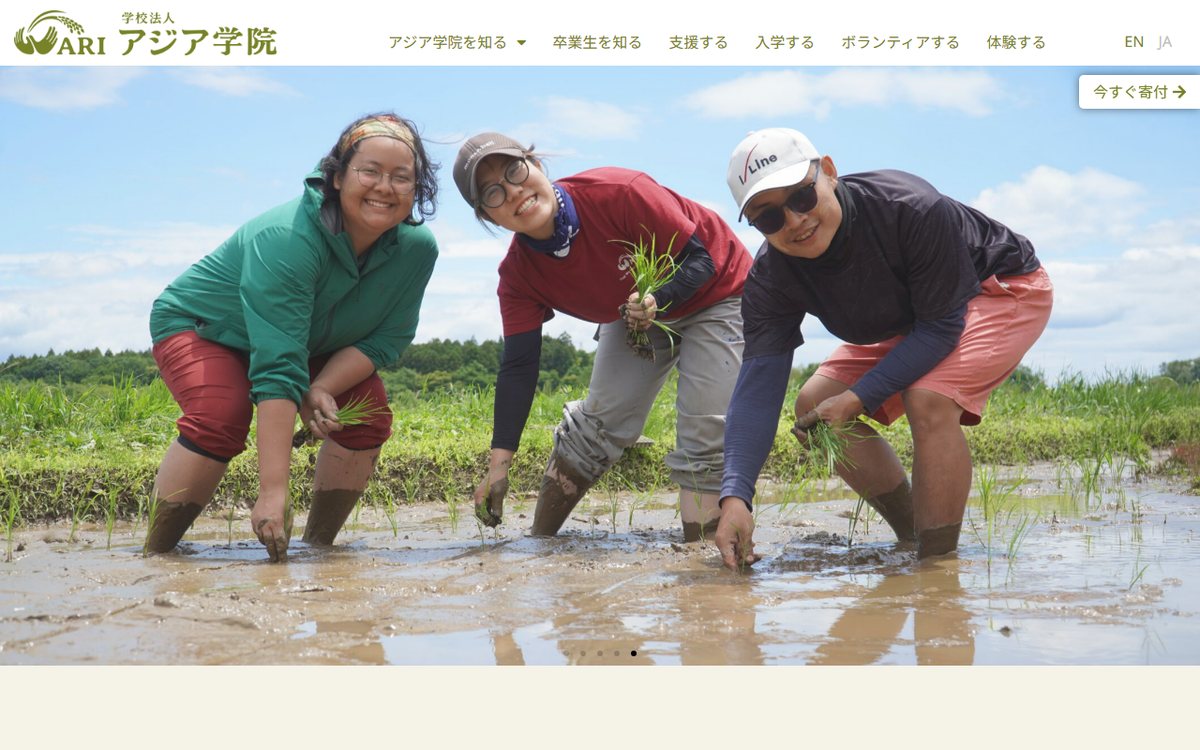
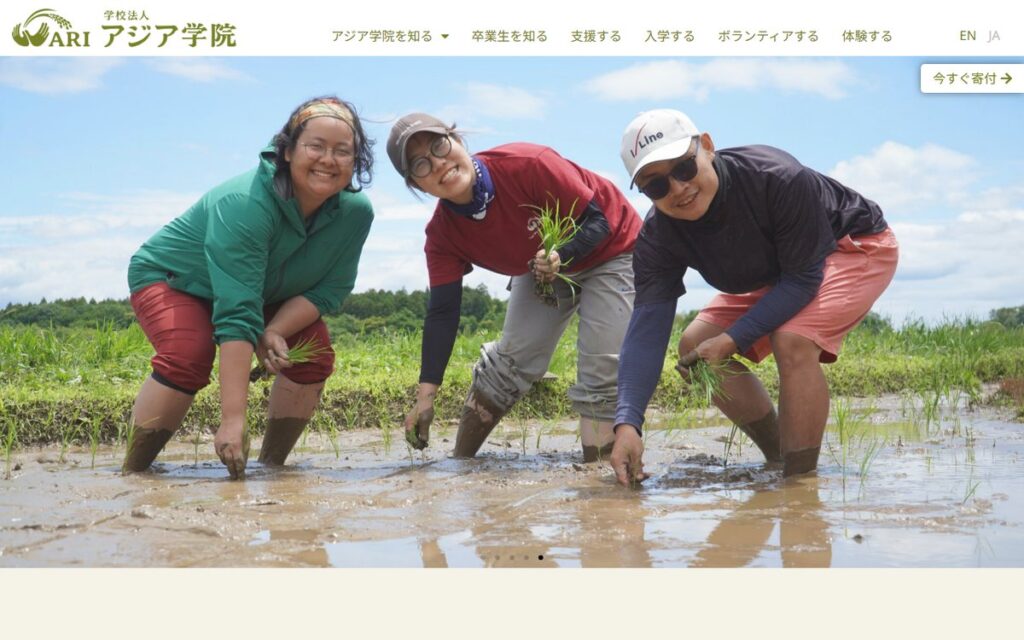
The campus is a residential school surrounded by forests and fields, and both classes and daily life are conducted in English. The school practices organic farming that can be applied in rural areas of developing countries, and says its food self-sufficiency rate exceeds 95%. Since its founding, the school has covered almost all of participants' tuition and travel costs, and its operation is supported by donations from individuals, companies, churches and others.
Key points
- Rather than sending people or goods to developing countries, it invites local leaders to Japan and trains them, supporting endogenous development
- An international community where participants, volunteers and staff live together and practice organic farming with a food self-sufficiency rate above 95%
- Programs open to the public, including admission of Japanese participants (up to five a year), farm experiences, open campus days and volunteering
Why this organization's work stands out
Problems are solved by the people who live rooted in the land. ARI's training has given shape to this idea for more than 50 years. It anticipates that the sending organization and the graduate will make plans together after returning home and work on community development, which offers a useful model of international cooperation that does not end after a single occasion.
Its founder received the Ramon Magsaysay Award in 1996, and in 2026 it received the 15th Kubota-Mainichi Earth Future Prize, so its long record is recognized in Japan and abroad. Although most of its facilities were damaged in the 2011 earthquake, it recovered with a great deal of support, and, marking its 50th anniversary, it has also started new initiatives such as corporate training and local partnerships.
Editor's comment
People of many nationalities and faiths farm the fields, cook meals and share their lives together. Reading about ARI, I was reminded of the weight of the words "living together." Another attraction is the many entry points open to those of us in Japan, such as weekend farm experiences, open campus days and volunteer recruitment.
If you are interested in international cooperation, agriculture or community building, why not visit the Nasu campus once? To start, take a look at the participants' daily life on the official website.