
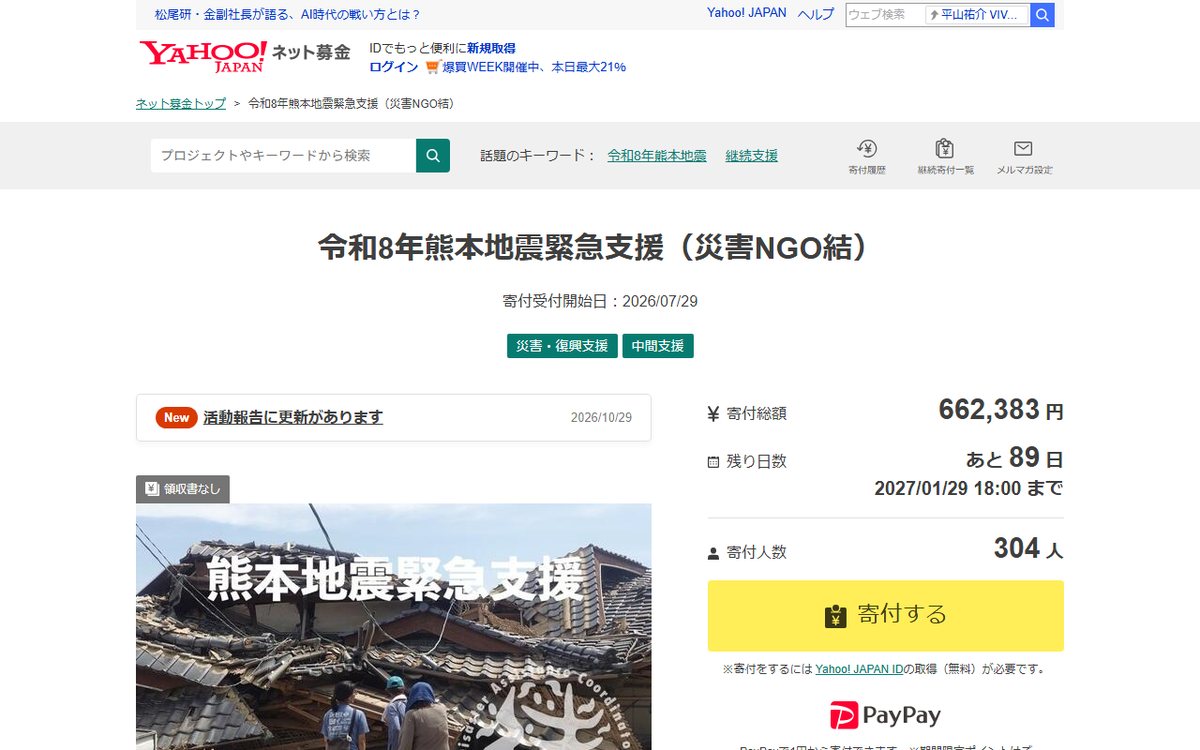
On July 28, 2026, an earthquake with a maximum seismic intensity of 7 struck Kumamoto Prefecture and surrounding areas. Disaster NGO Yui has helped with recovery and reconstruction in more than 30 disaster-affected areas across Japan since the 2011 Great East Japan Earthquake. It set out for Kumamoto on the night of the earthquake, delivering supplies while assessing conditions from Kumamoto City down to Yatsushiro, including to a welfare facility that had reported running short of food.
It then set up a base in Hikawa so it could support the three hardest-hit municipalities, and worked with other NPOs on water supply, retrieving valuables, and clearing roads. From pulling a combine harvester out of a collapsed barn to delivering meals to people sheltering at home, it has dealt with residents' problems one by one. The area was also hit by heavy rain in 2020 and flooding in 2025, and the organization is paying attention to the psychological burden on residents as well.
According to its October 29 report, it has now moved its base to the Yatsushiro disaster volunteer center and is coordinating with various partners as the "Yatsushiro Disaster NPO Center." Besides separating a house whose second floor had collapsed onto a neighbor's property and removing debris, it has held salons where residents can relax with soup-kitchen meals and massages, and a heavy machinery workshop to pass on skills. Donations are used for dispatching experts and staff, fuel, equipment and supplies, and running bases for volunteers.
Key points
- Setting out on the night of the earthquake, it delivered supplies and retrieved valuables from the very start
- Three months on, it is still supporting residents' lives and well-being from its Yatsushiro base through debris removal and salons
- Donations are accepted via Yahoo! Net Bokin until January 29, 2027, and go toward dispatching experts, running bases, and more
Why This News Deserves Attention
As time passes after a disaster, news from affected areas becomes harder to find. Disaster NGO Yui's reports show that cleanup and housing problems are still ongoing, and that creating moments where residents can feel at ease is also important support.
Passing on experience built up in many disaster areas to the next generation of responders, through workshops such as heavy machinery training, is also a useful example of long-term support.
Staff comments

Minato AobaResearch
“I was surprised that they set out on the night of the earthquake and are still working in Yatsushiro three months later. The area was also hit by heavy rain in 2020 and flooding in 2025, so their care for residents' emotional strain makes deep sense.”

Sophie HiroseWriting and translation
“I agree with Aoba about caring for residents' emotional strain. Alongside debris removal, the salons offering soup-kitchen meals and massages left a strong impression on me. Rebuilding daily life surely needs moments of rest for the heart, too.”

Mako JozenjiProofreading and verification
“Hearing you both, I felt that disaster support grows harder to see as time passes, yet what comes after is what truly matters. Passing on skills to others through heavy machinery workshops also shows a warm determination to support the area for the long run.”
Editor-in-Chief’s comment
Ren DateEditor-in-Chief
“Three months since the earthquake. Even as it appears less often in the news, work continues on the ground, cleaning up house by house and staying close to residents' feelings. I felt that a moment of relief over a massage at a salon is real support, too. Why not turn your thoughts to the affected areas of Kumamoto once again?”