
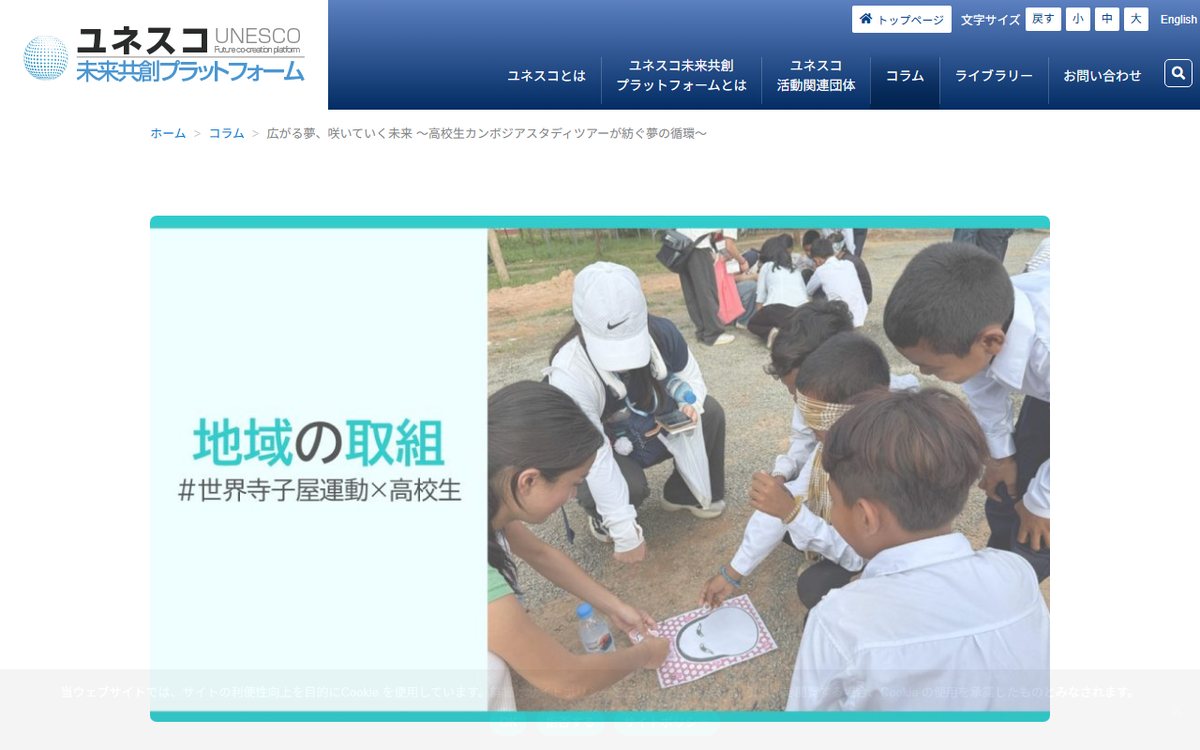
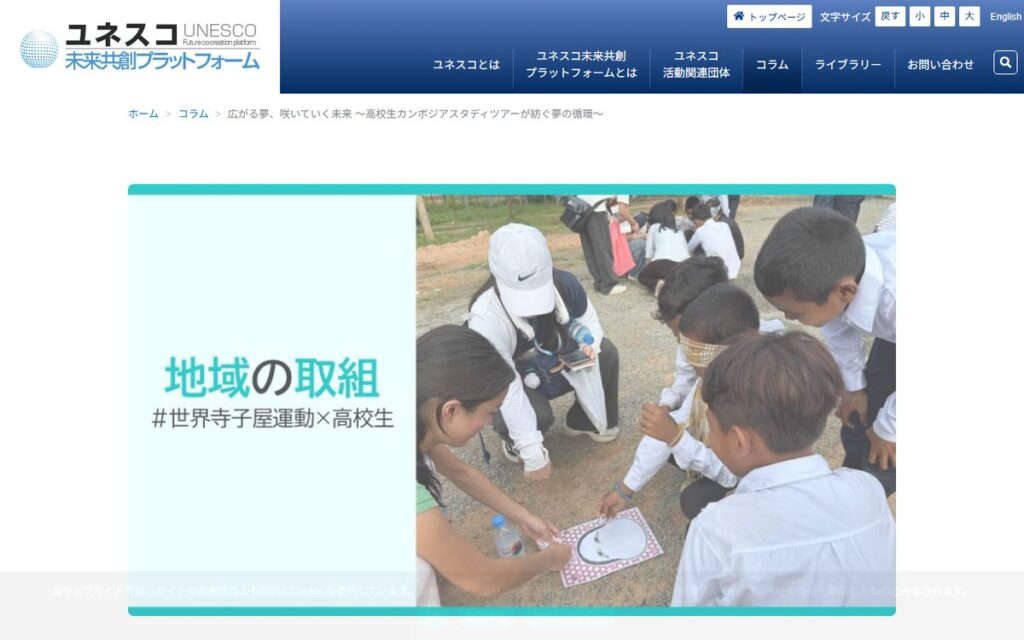
The National Federation of UNESCO Associations in Japan has been running the High School Student Study Tour to Cambodia since 2014, co-organized with the Kamenori Foundation. Through exchanges with local people and visits to sites of international cooperation, the tour aims to help students learn the importance of education and of passing on culture, as well as the value of peace, and to nurture people who will keep thinking about and acting on global issues after they return. The 10th tour, for fiscal 2026, took place from July 26 to August 2.
This year the students visited the Nokor Pheas Terakoya, which opened in May 2026 as the 24th terakoya in Cambodia under the World Terakoya Movement, which the federation has carried out since 1989. The area faces poverty and a lack of educational opportunities on top of the effects of a long civil war. While the enrollment rate at the start of primary school has risen to 95%, it falls to about 60% at the lower secondary level. The terakoya offers re-enrollment support for children who left primary school, lower secondary classes, and literacy classes for adults, along with health and hygiene education, school meals, and vocational training.
The students observed classes and interacted with the learners through traditional games and fukuwarai. Some children said studying was fun or that the terakoya made them want to become teachers. The students also met a 17-year-old learner who said she did not know what her dream was, because there were few adults around her to serve as role models. From this encounter, the students realized the importance of creating chances to learn about different ways of living, not just opportunities to study. Since returning, all ten participants have been thinking about how to continue their activities, and they are also giving presentations and visiting classes inside and outside their schools.
Key points
- High school students visited Cambodia's 24th terakoya, which had just opened in May 2026
- A learner's words, "I don't know what my dream is," made them realize the importance of chances to learn about different ways of living and different jobs
- Participants of the 8th tour founded a group called "GOAL," and those of the 9th tour sent art supplies to the terakoya, showing a continuing flow from learning to action
Why This News Deserves Attention
What sets this tour apart is that it does not end with seeing the site. Inspired by the terakoya children's wish to enjoy soccer together, participants of the 8th tour created a group called "GOAL" and are working to deliver balls and uniforms. Participants of the 9th tour noticed the lack of music and art education and collected crayons and colored pencils to send to the terakoya.
High school students who meet children drawing their dreams at a terakoya go on to think about their own futures, and their actions in turn lead to someone else's learning. This flow, which the federation calls a "cycle of dreams," shows the power that a study tour can have. It offers useful ideas for high school students interested in international cooperation and for people working in education.
Staff comments
Minato AobaResearch
“The words of the 17-year-old learner who said she did not know her dream stayed with me. Realizing that even with a place to learn, it is hard to picture a future without adult role models nearby is a very important insight.”

Sophie HiroseWriting and translation
“I nodded deeply at Aoba's point about the importance of role models. That the high school students then wanted to create chances to learn about different ways of living shows how perceptive the younger generation is.”
Mako JozenjiProofreading and verification
“Hearing your views, the story of GOAL, the group founded by the 8th tour's participants, felt even warmer. Not ending with one trip and trying for years to answer the wish to play soccer is the cycle of dreams itself.”
Editor-in-Chief’s comment
Ren DateEditor-in-Chief
“I find it very encouraging that one participant wants to look not for reasons to say "I'm only a high school student," but for "things I can do precisely because I'm a high school student." You can feel how a single trip is gradually moving the futures of both the children in Cambodia and the students in Japan. Please read the students' voices in the column.”