
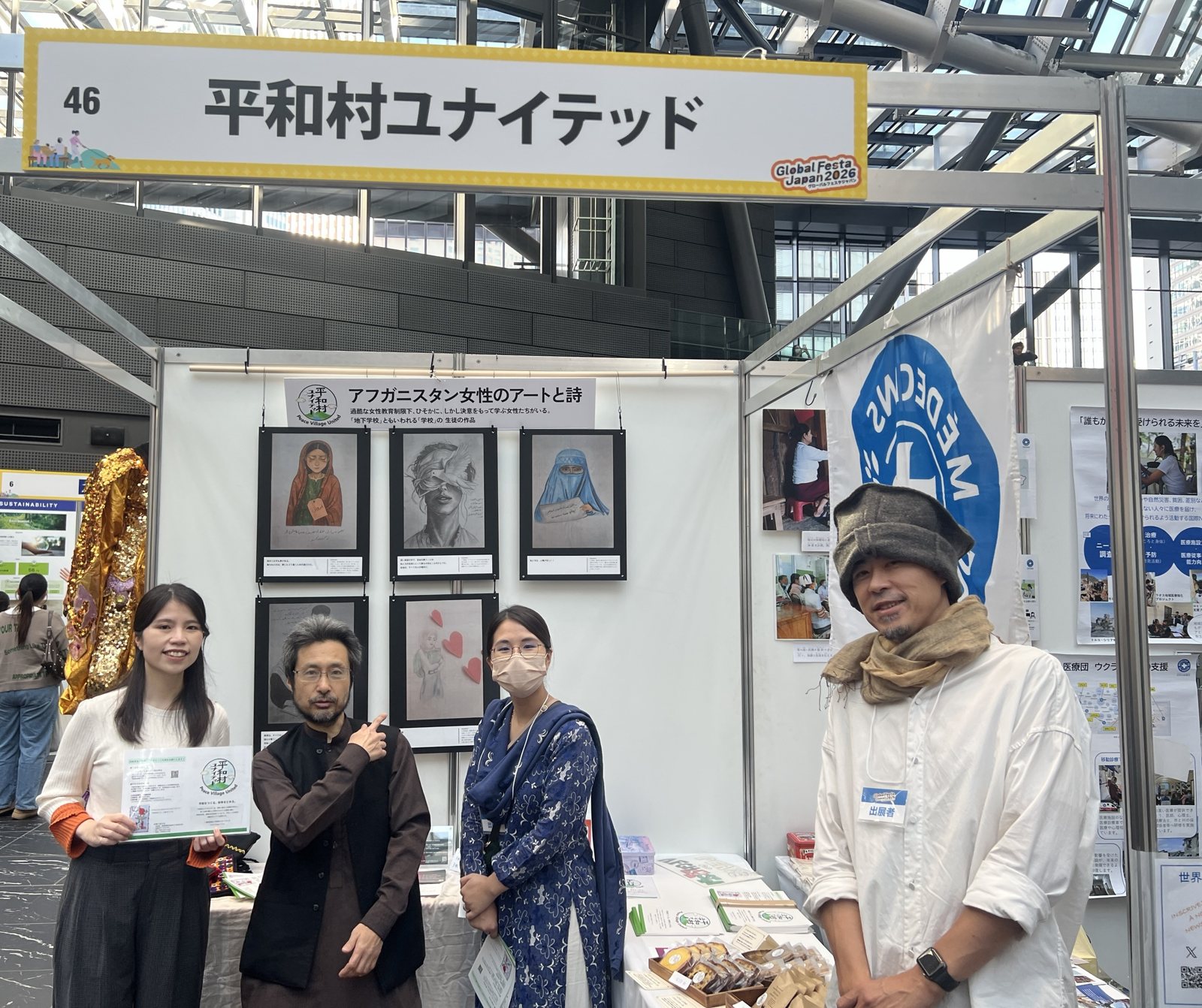
Conflicts never cease around the world, and there is an NGO that has made “building peace” itself its purpose: Peace Village United, a general incorporated association that works in Afghanistan and Pakistan.
At Global Festa Japan 2026, held on October 17 and 18, the NGO network Japan editorial team interviewed Mr. Ryo Onoyama, its Representative Director. He told us about the harsh situation on the ground, where violence and human rights abuses continue, and how to stand by the people who live there.
The challenge of actively “building peace”
International cooperation takes many forms, but Peace Village United holds a clear vision: making peace its very purpose. Mr. Onoyama describes its work this way:
“Our purpose is to build peace and stop conflict more actively.”
Its main areas of work are Afghanistan and Pakistan. Both countries have seen conflict for many years and still face serious problems such as violence and human rights abuses. Hearing “conflict zone,” we tend to think of events in a distant world, but there people live harsh daily lives next to danger. Peace Village United keeps pursuing fundamental approaches to peacebuilding in such environments.
Concrete work in Afghanistan and Pakistan
Peace Village United provides support tailored to each country’s circumstances.
In Afghanistan, women’s rights remain under threat amid political change. Even so, according to Mr. Onoyama, “we continue education even while women’s education is restricted.” Even in difficult conditions, steady support helps people there keep their opportunity to learn.
In neighboring Pakistan, “we support activities by young people to build peace,” he explains. To break the cycle of conflict and violence, it is essential that the next generation become bearers of peace themselves. Through support for young people, foundations for future peace are being laid.
These activities are planned to continue, and as long as the harsh conditions in both countries persist, the organization’s support will not stop.
Difficulties unique to conflict zones, and the responsibility to keep people safe
Work in conflict zones always carries great risk. The hardest thing Mr. Onoyama named in the interview was safety management.
“Many of our activities are in conflict zones, so it’s safety management. (The hard part is) working while protecting the safety of everyone involved and the people who are there.”
Protecting the lives not only of NGO staff but also of local people and collaborators who receive support is the top priority for keeping activities going. Behind peacebuilding is always careful attention to safety, held with constant tension.
Afghan women’s art and poetry, seen at the venue
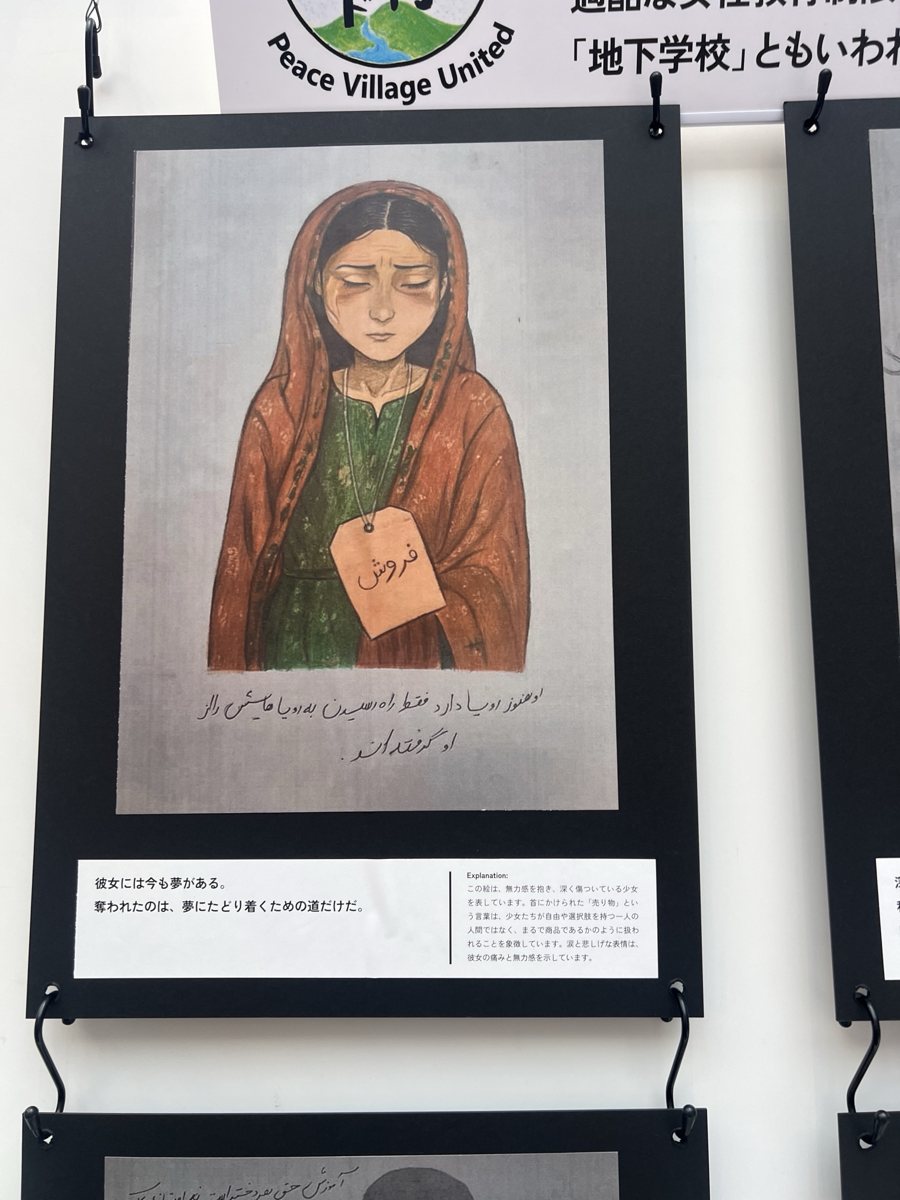
The booth featured an exhibition titled “Art and Poetry by Afghan Women.” Under harsh restrictions on women’s education, there are women who study secretly but with determination. The works on display are by students of what are also called “underground schools.”
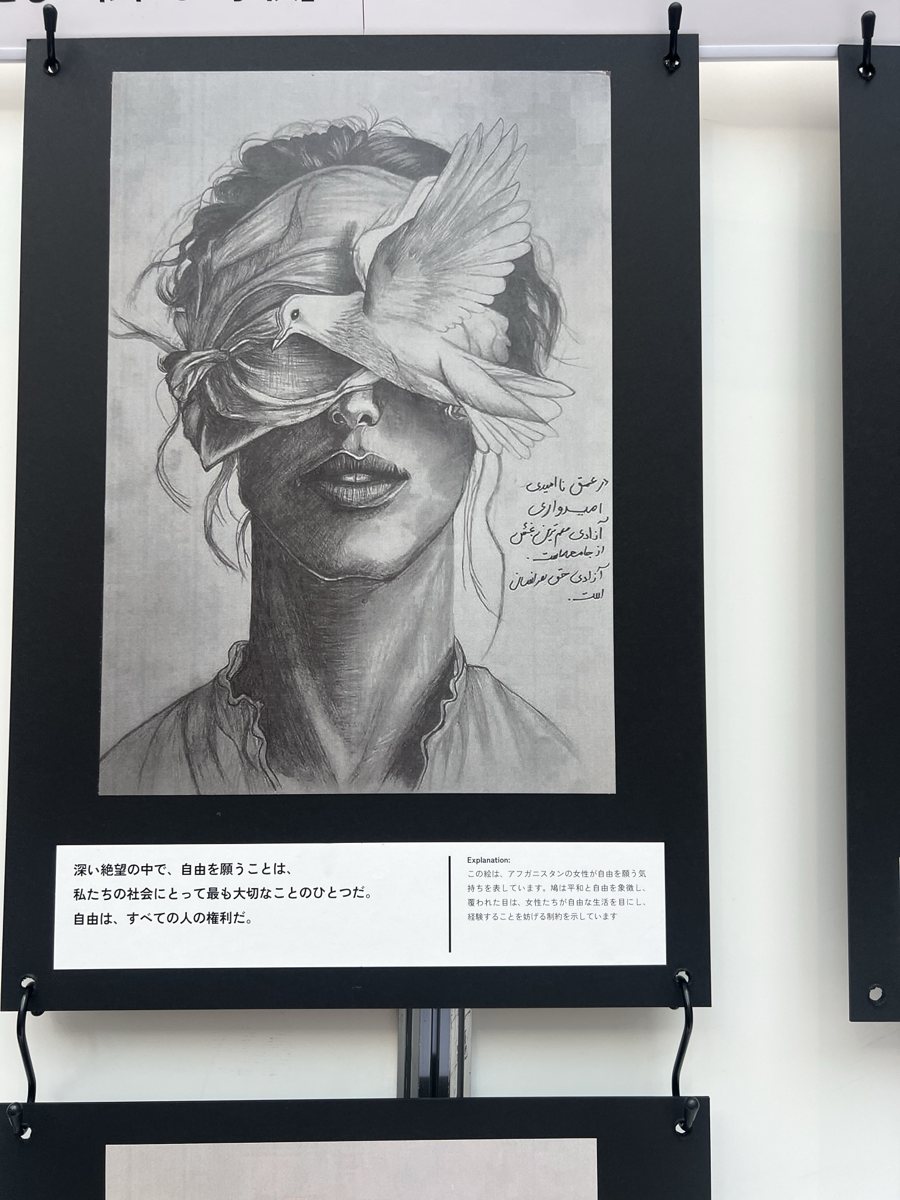
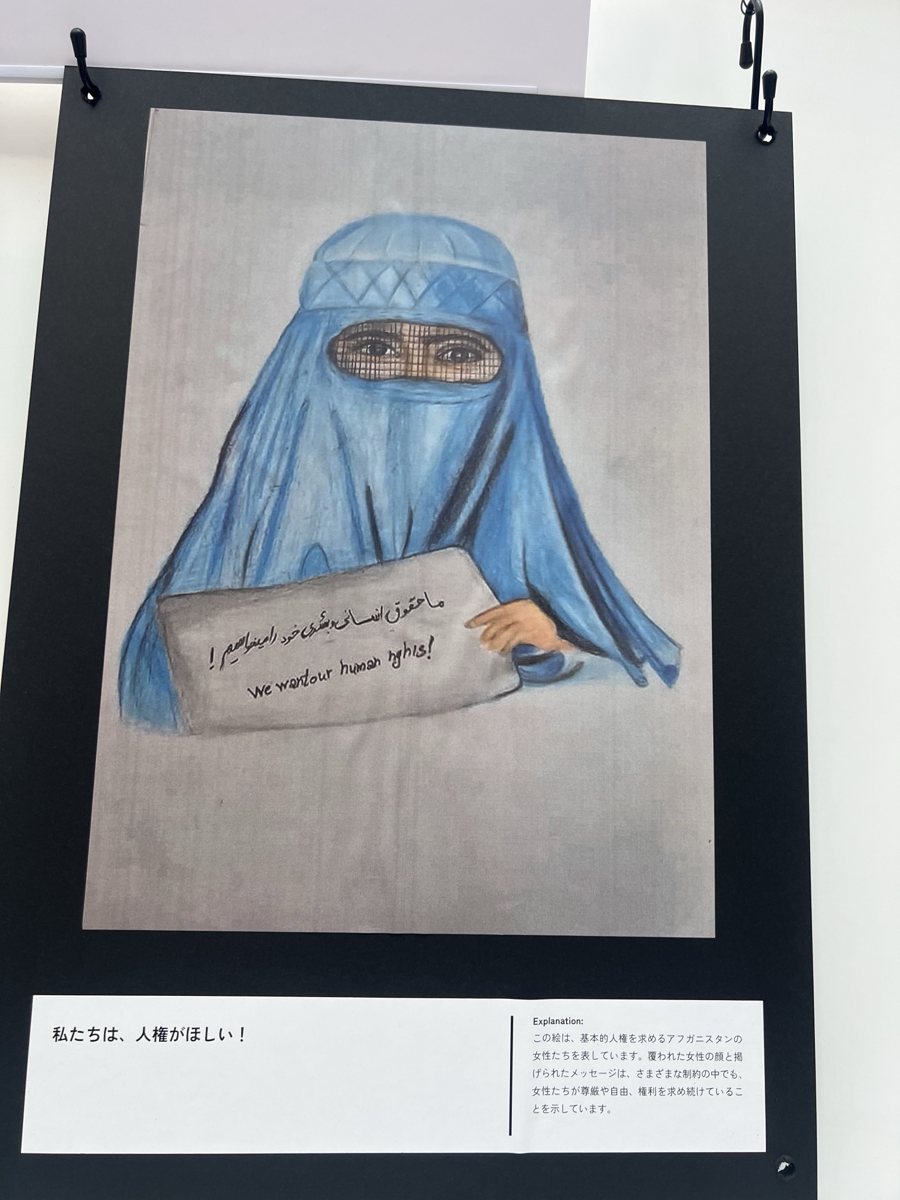
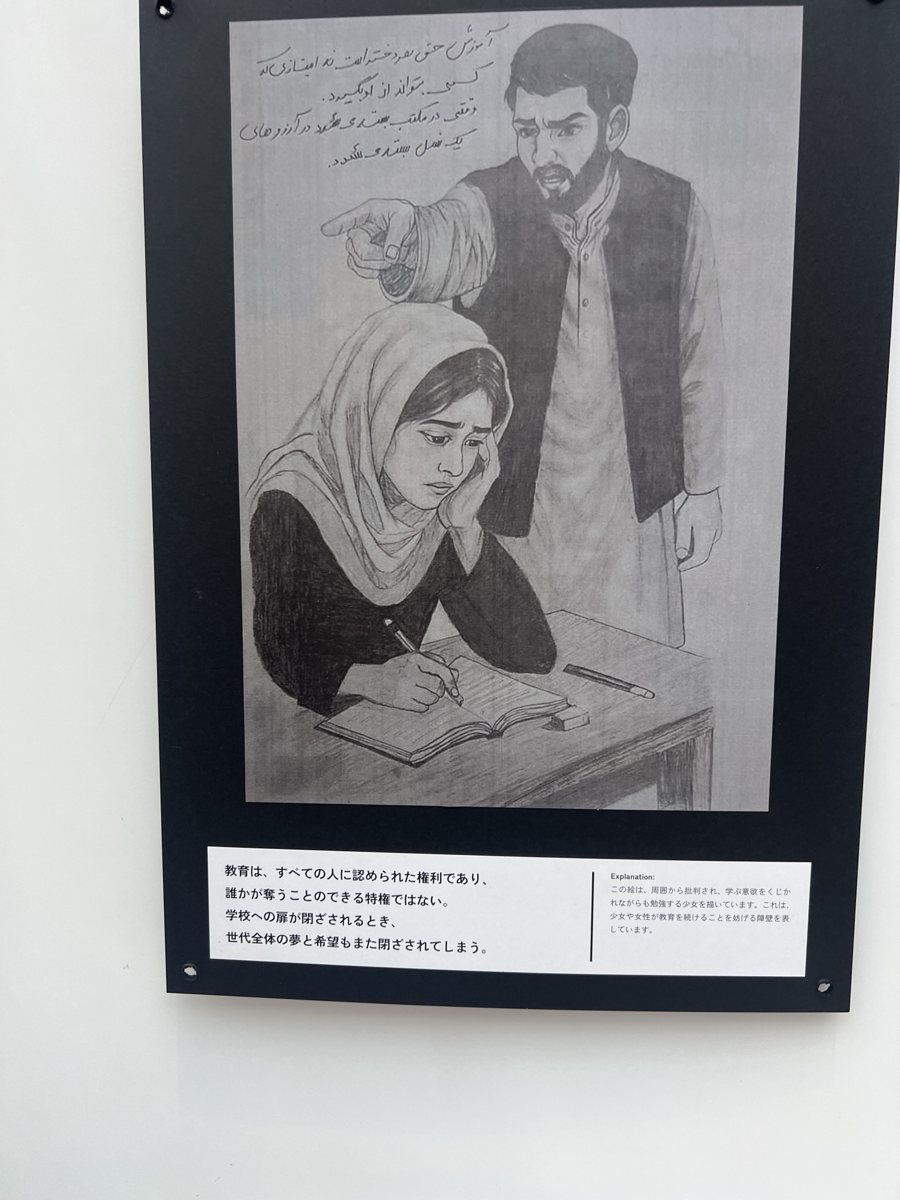
What we can do in Japan: “support one another as fellow human beings”
How can those of us far away in Japan relate to their work and the situation there? Mr. Onoyama named three concrete actions.
• Learn about the situation there, for example through exhibitions<br>• Share what you have seen and heard<br>• Support the work in concrete ways
At Global Festa Japan 2026, too, the booth displayed the people working under harsh conditions in the field, giving citizens in Japan a chance to meet them directly. Mr. Onoyama himself says he is glad when such displays help people learn about peace efforts there.
Finally, he had this message for people in Japan:
“Even though it is ‘over there,’ people live there just as in Japan, suffering and crying and laughing in the same way as they carry on their work. I hope you will support one another as fellow human beings.”
Rather than attaching the special label “people in conflict zones,” see them as people who live with the same joys and sorrows as we do. That should be what makes international cooperation feel close and the first step toward truly “building peace.”
About the organization: Peace Village United
You can read an overview of Peace Village United in our NGO profile.
Read the NGO profile of Peace Village United → / Official website: http://pv-u.org/
Interview information
Interview: NGO network Japan editorial team / Event: Global Festa Japan 2026 (booth no. 46) / Dates: October 17–18, 2026