
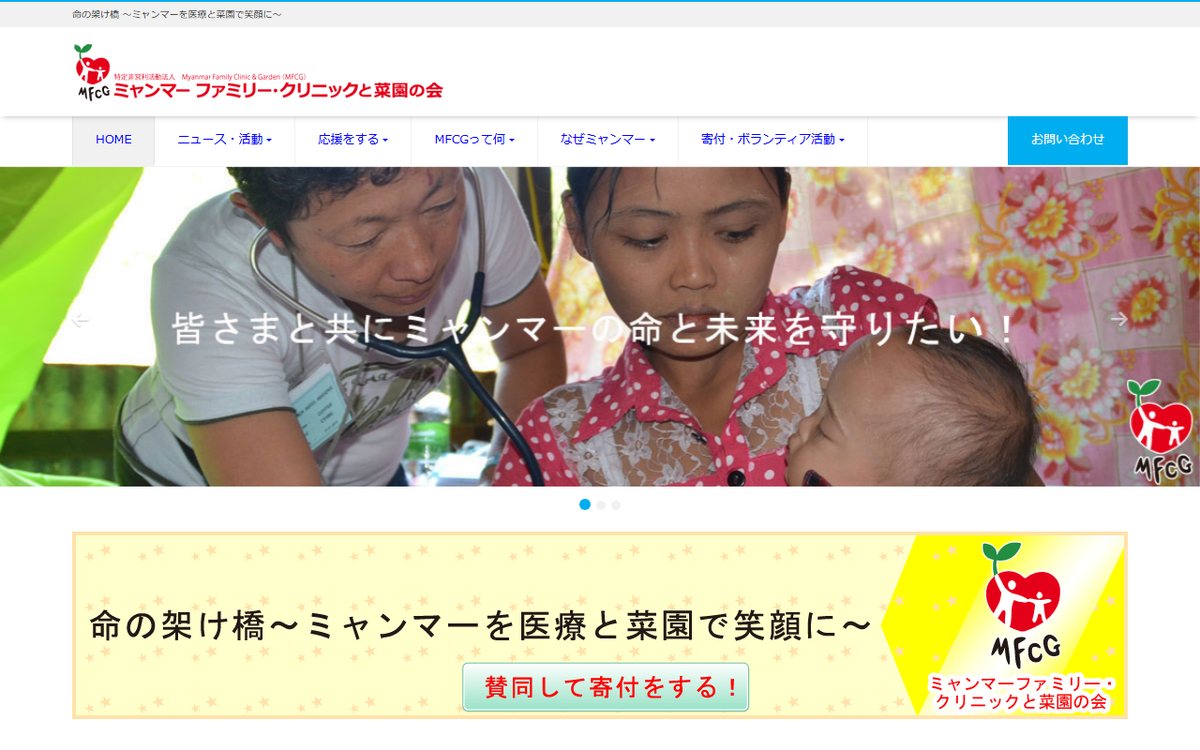
Myanmar Family Clinic and Garden (MFCG) is an organization with the motto "Bridge of Life: Bringing Smiles to Myanmar through Medicine and Gardens." In September 2008 it began as a voluntary group aiming at self-sustaining, circular aid by creating a medical clinic and a vegetable garden to improve nutrition. In May 2012 it adopted its current name, and in June 2012 it was certified as an NPO corporation.
In January 2015, using 2 million yen raised through crowdfunding, it bought a vehicle for mobile clinics and began visiting rural areas from a base in Myaungmya (ミャウンミャ), west of Yangon. From August of that year it began vegetable garden guidance in rural villages, inviting experts for hands-on practice in organic farming. From December 2015 it also began training courses for "Community Health Promoters (CHP)," local people who learn health and hygiene knowledge and spread it to other residents.
In Japan, it holds activity report meetings for supporters, lectures and charity concerts. It is also introduced that people from Myanmar living in Japan support MFCG by helping with office work and by performing dances and songs at report meetings. It also invites support for children and women through organic coffee from Myanmar.
Key points
- Aiming at self-sustaining, circular aid that combines a medical clinic with a vegetable garden
- Mobile clinics to rural areas using a vehicle bought through crowdfunding
- Training "Community Health Promoters" who spread health and hygiene knowledge among residents
Why this organization deserves attention
Beyond treatment, it helps villagers build the strength to protect their own health through vegetable gardens and the spread of health and hygiene knowledge. Its idea of supporting a community from both the "medical" and the "food" sides comes across clearly.
As an activity linking Japan and Myanmar, it also puts effort into exchange with people from Myanmar living in Japan. The sight of people of both countries moving forward hand in hand shows us a warm form of international cooperation.
Editor's comment
The logo is said to carry the wish that Myanmar and Japan walk together hand in hand. Delivering medical care and growing food in a garden both feel like support rooted in daily life.
On the official website you can read monthly newsletters and reports on activities in Myanmar. If you are curious, why not take a look?