
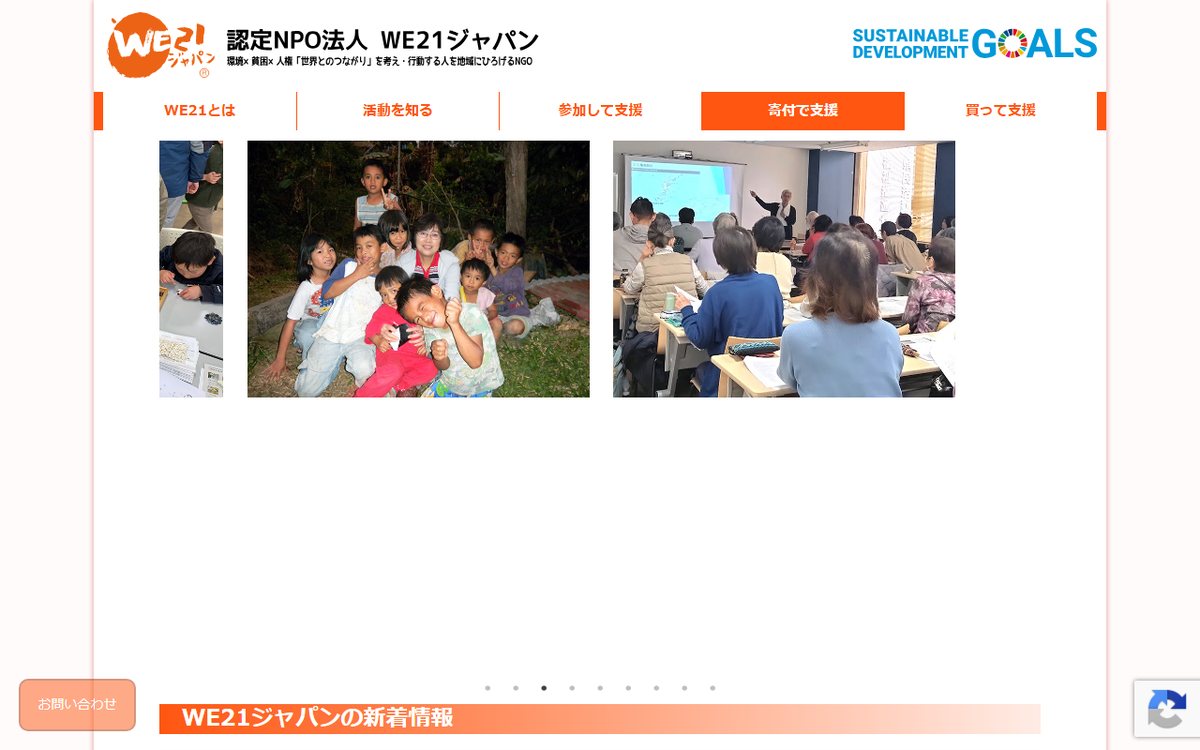
WE21 Japan is an NGO that spreads, in local communities, the number of citizens who notice, think and act to solve environmental destruction and poverty. Centered on Kanagawa Prefecture, it operates as the WE21 Japan Group, in which WE21 Japan and 29 regional NPOs work together.
Its base is the WE Shop, a reuse and recycling charity shop. According to its website there are currently 36 shops. They sell clothing and household goods donated by local residents, and the proceeds fund cooperation with people mainly in Asia, "tomoiku" (learning together) activities on the environment, poverty and human rights, and policy advocacy.
Its history begins with a 1996 visit to Oxfam charity shops in the United Kingdom, followed by the opening of the first WE Shop in Atsugi in 1998. A timeline on the website shows how it has expanded its efforts, including recycling of glass and ceramics, mobile phones and cooking oil, a feather recycling project, and an online shop.
Key points
- The WE21 Japan Group, a network of 29 regional NPOs
- 36 WE Shops that make shopping a way to support
- Citizen-participation campaigns such as the anti-poverty campaign, launched in 2007
Why this organization deserves attention
Its model of selling donated goods and putting the proceeds toward international cooperation and learning makes everyday shopping and decluttering a way of taking part in society. Community-based shops serve as an entry point for thinking about our connection with the world.
Besides donations, it offers many ways to get involved, such as courses and events, internships and volunteering, and development education workshops. It is a useful reference for anyone who wants to think about the environment and human rights starting close to home.
Editor's comment
Shopping at a nearby store or bringing in clothes you no longer wear can be a first step toward connecting with people in faraway countries. WE21 Japan's work makes us notice this.
Why not drop by a WE Shop near you, or look for an event on the official website?