
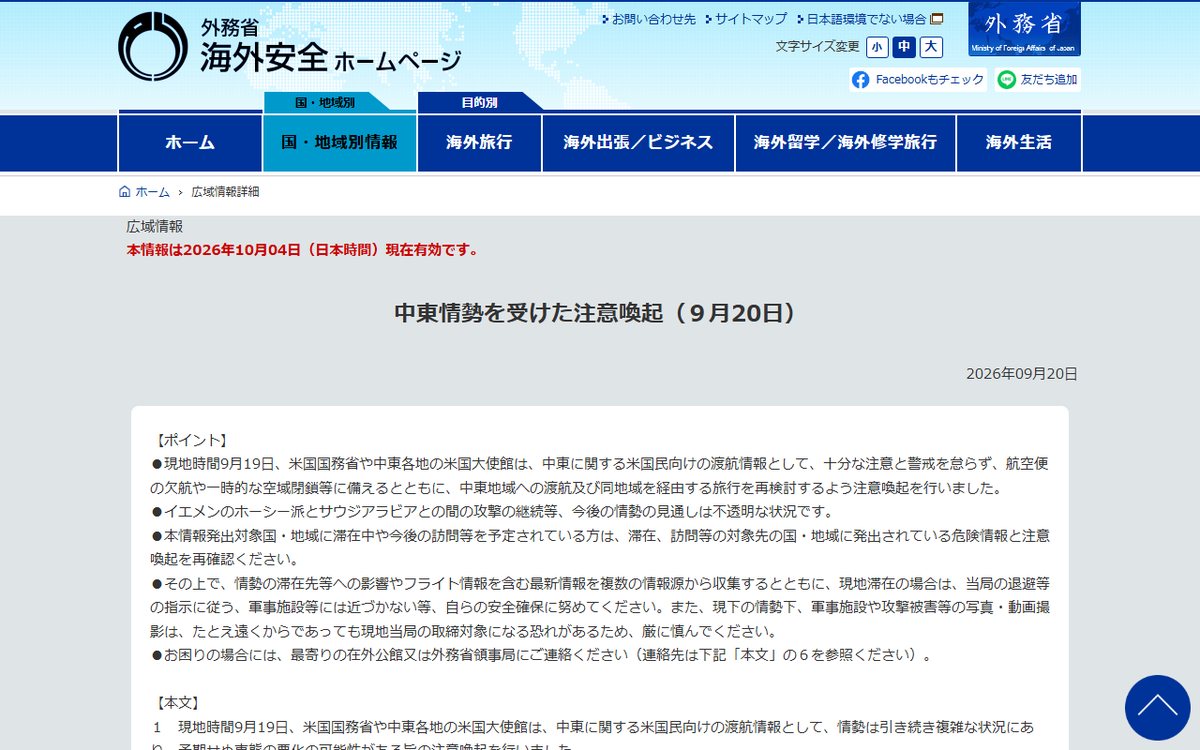
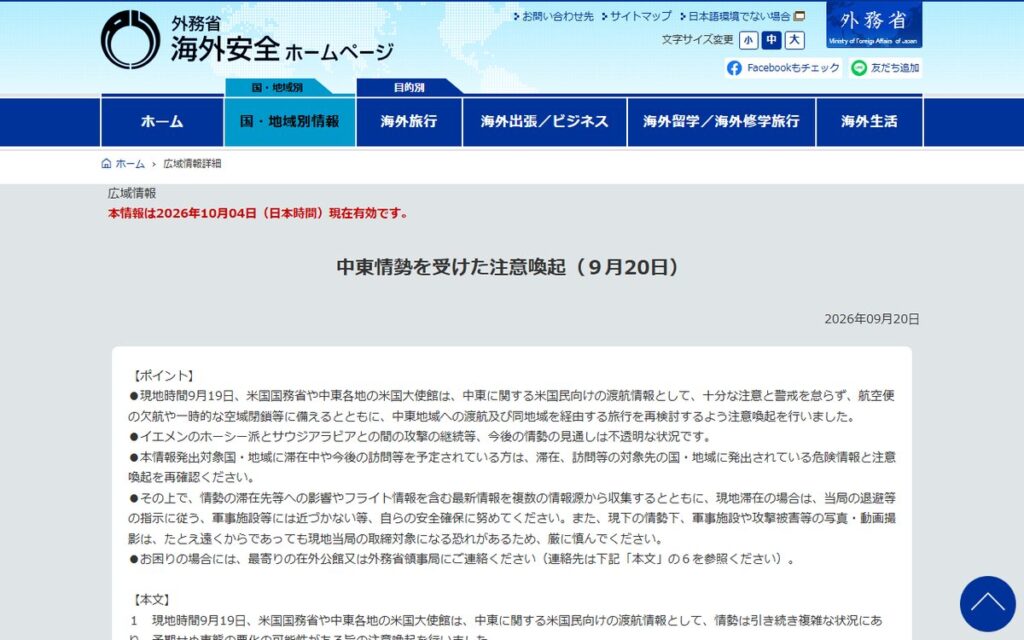
On September 20, the Ministry of Foreign Affairs of Japan issued a caution notice covering the Middle East. It follows travel information that the U.S. Department of State and others issued to their own citizens on September 19 local time, which urged preparation for flight cancellations and temporary airspace closures and called for reconsidering travel to or through the Middle East.
The notice says the outlook remains uncertain, citing, among other things, continuing attacks between the Houthis in Yemen and Saudi Arabia. Hazard information has been issued for all of the countries and regions covered, and some of them are at Level 4 (Evacuate) across their entire territory.
People who are staying in or planning to visit these places are asked to recheck the hazard information for their destination and the cautions issued by embassies and other missions, to gather the latest information, including flight information, from multiple sources, and to follow the instructions of local authorities and stay away from military facilities and similar sites. The notice also asks people to refrain from taking photos or videos of military facilities or damage sites, as doing so, even from a distance, may result in enforcement action.
Key points
- 14 countries and regions in the Middle East are covered, and hazard information has been issued for all of them
- Be prepared for effects on travel, such as flight cancellations and airspace closures
- People are encouraged to register with "Tabi-Regi" (and to submit a residence report if staying three months or longer)
Why this news is worth your attention
The Middle East is a region that many NGO staff working in humanitarian aid and development cooperation visit, as do people traveling for research or training. Many others also pass through Middle Eastern airports on connecting flights even when it is not their destination. Airspace closures and flight cancellations may affect travel plans like these.
This information was issued on September 20, and the situation may change from day to day. If you are considering travel, be sure to check the latest information on the Ministry of Foreign Affairs of Japan Overseas Safety website.
Editor's comment
For organizations and staff working overseas, and for anyone planning to travel, checking safety information is the most important part of preparation. It is also worth making a habit of telling your family or workplace your schedule and contact details before you leave, and of registering with "Tabi-Regi."
The content of this article reflects the situation as of the issue date (September 20). If you run into trouble, you can consult the nearest Japanese embassy or consulate, or the Consular Affairs Bureau of the Ministry of Foreign Affairs of Japan. Before you travel or stay, please be sure to check the latest information on the Ministry of Foreign Affairs of Japan Overseas Safety website.