
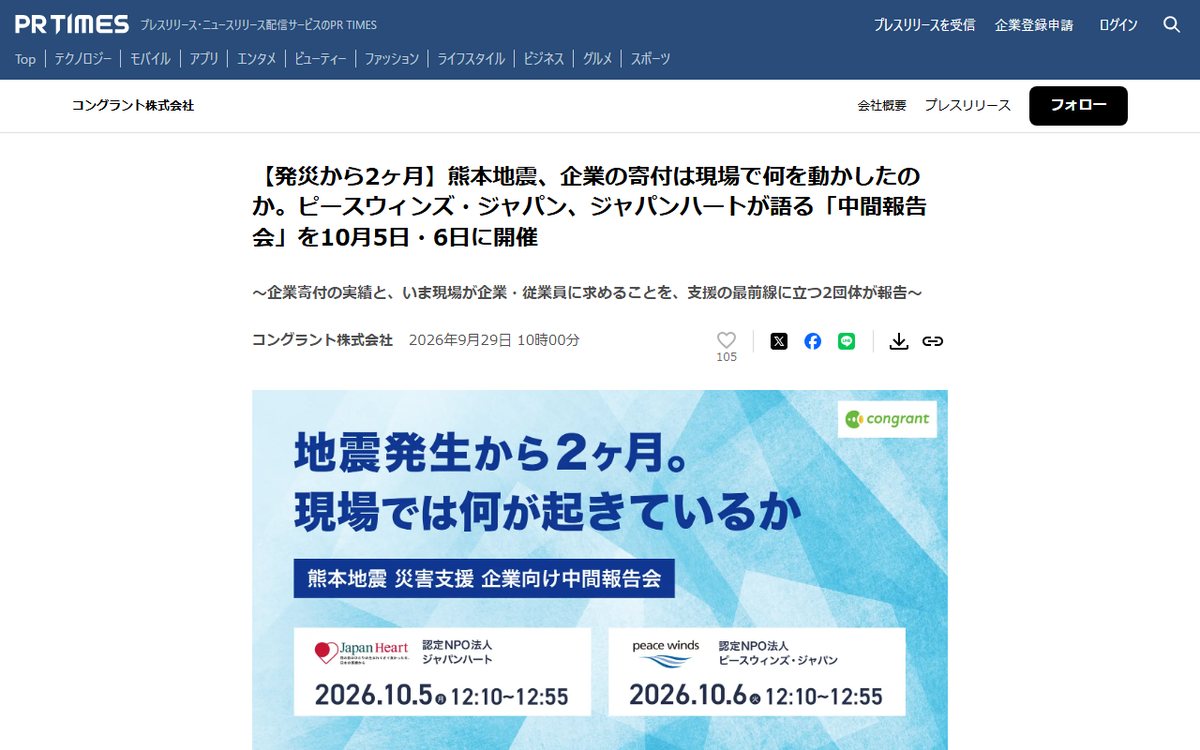
To mark two months since the Kumamoto earthquake, the certified NPOs Peace Winds Japan and Japan Heart, which are working in the affected area, will hold the "Kumamoto Earthquake Disaster Relief: Interim Report Session for Companies" online, together with Congrant, Inc., a provider of donation payment services. Japan Heart will speak on Monday, October 5, and Peace Winds Japan on Tuesday, October 6, each in a 45-minute program at midday.
In the interim report, the two organizations will explain how donations from companies were used and how they helped on the ground. They also plan to share, with stories from the field, how the affected area has changed in the two months since the disaster, the areas where funds and supplies are now lacking, and what they hope companies and employees will do when disasters strike.
According to the announcement, Peace Winds Japan has expanded its activities from life-saving and medical support right after the disaster to improving conditions in evacuation centers, providing supplies, water and bathing support, health consultations, and help with rebuilding livelihoods. Japan Heart sent a medical team of 50 people in total to several evacuation centers in Yatsushiro City from the day after the disaster and has supported evacuees around the clock. Even as of September 25, more than 700 people in Yatsushiro were still living in evacuation centers, and with the application period of the Disaster Relief Act ending at the end of September, many support teams are reportedly set to withdraw.
Key points
- Two organizations that have worked on the ground since right after the disaster report directly on how donations were used and how conditions have changed
- As support shifts from "protecting lives" to "rebuilding livelihoods," you can hear what is lacking now
- A 45-minute, free, online lunchtime session that is easy for corporate staff and employees to join
Why we recommend this event
After a major disaster, news coverage fades as time passes, yet in the affected area problems such as prolonged evacuation, housing, health and rebuilding livelihoods only grow more complex. The organizations' call to keep paying attention, not only during emergency relief right after the disaster, is an important perspective for everyone involved in disaster relief.
A place where donors and the field share what donations were used for and how they helped, rather than ending at "giving," is also a useful reference for building trust between companies and NGOs and NPOs. It could also prompt companies to think about how they can get involved, in preparation for the next disaster.
Editor's comment
The period of moving from evacuation centers to temporary housing is one in which support teams gradually leave the area while each person's worries become more detailed and harder to see. I think this is a valuable chance to hear about that "aftermath" directly from the organizations on the front lines.
The sessions are aimed mainly at corporate social contribution staff, but the content will also be useful for anyone who wants to know about Kumamoto today or to think about how to donate during disasters. For details such as how to register, please see the PR TIMES announcement.