
Asha – Walking with Asia's Farmers (アーシャ=アジアの農民と歩む会) is an NPO founded in 2004 by members who had long been engaged in rural development in India and other parts of rural Asia. As farming that relies on chemical fertilizers and pesticides spreads, the lives of small-scale farmers grow harder and the soil and natural environment are damaged. In response, the organization aims to spread environmentally conscious, sustainable agriculture and livelihoods together with local people.
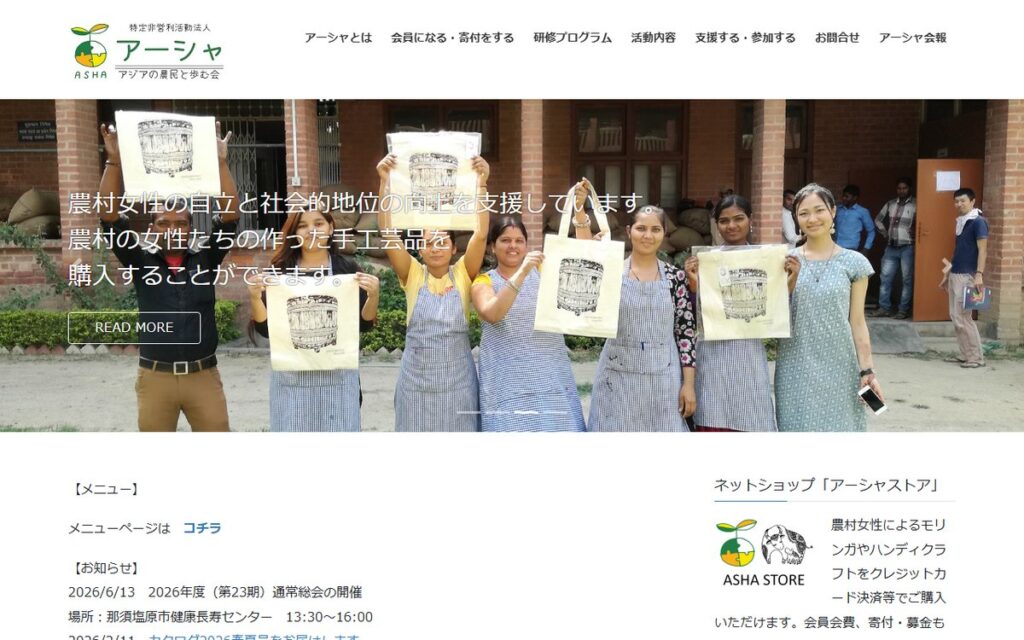
Its activities center on villages in North India. At the Makino School, run in cooperation with a local university, students from India, Japan and Myanmar learn about organic farming and rural development. The organization also supports the processing and sale of farm products by organic farming cooperatives, sells fair trade moringa powder (a highly nutritious plant) and sewn goods and handicrafts made by village women, and works on primary education for children and improvements in health and hygiene.
Another distinctive feature is that it deliberately has its office in Tochigi Prefecture rather than in the Tokyo area, and it values creating opportunities for citizens in regional Japan to take part in international cooperation.
Key points
- Trains the next generation of sustainable farming leaders at the Makino School, which develops village leaders
- Supports higher incomes and a stronger status for village women through fair trade of moringa and handicrafts
- Based in Tochigi Prefecture, it practices citizen-participation international cooperation from a regional base
Why this organization's work stands out
In villages of North India, women are said to do much of the farm work, yet old customs and gender inequality limit their opportunities to earn income or voice their opinions. Asha has created a clear cycle: it builds systems that let women earn their own income through growing and processing moringa and through sewing, and Japanese consumers sustain that system by buying the products.
It also works on both “people-building” and “system-building,” not only passing on farming techniques but also creating schools to train people and supporting processing and sales. This is a useful model for support that lasts.
Staff comments

Minato AobaResearch
“I was impressed that fair trade sales of moringa powder, sewn goods and handicrafts create a way for rural women in northern India to earn their own income. It is easy to see how buying becomes support.”

Sophie HiroseWriting and translation
“I agree with your focus on how women earn income, Aoba. It is a clear cycle in which consumers in Japan support it by buying products, and I find it appealing that people can take part from Japan.”

Mako JozenjiProofreading and verification
“From what you both said, I sense a long-lasting kind of support that works on both building people and building systems. I also have high hopes for how it values a base in Tochigi where citizens outside the capital region can take part.”
Editor-in-Chief’s comment
Ren DateEditor-in-Chief
“When we think of international cooperation, we tend to think of “going to the field,” but one appeal of Asha's work is that you can take part from Japan, simply by buying moringa powder or handicrafts. In addition to its online shop, it also offers study tours, work camps and internships, so we especially recommend it to students interested in agriculture and rural development.
We also sense a grounded approach in the fact that, for more than 20 years since its founding, it has kept going while openly publishing its general meetings and activity reports. To begin with, take a look at its official website and see what villages in North India are like.”