
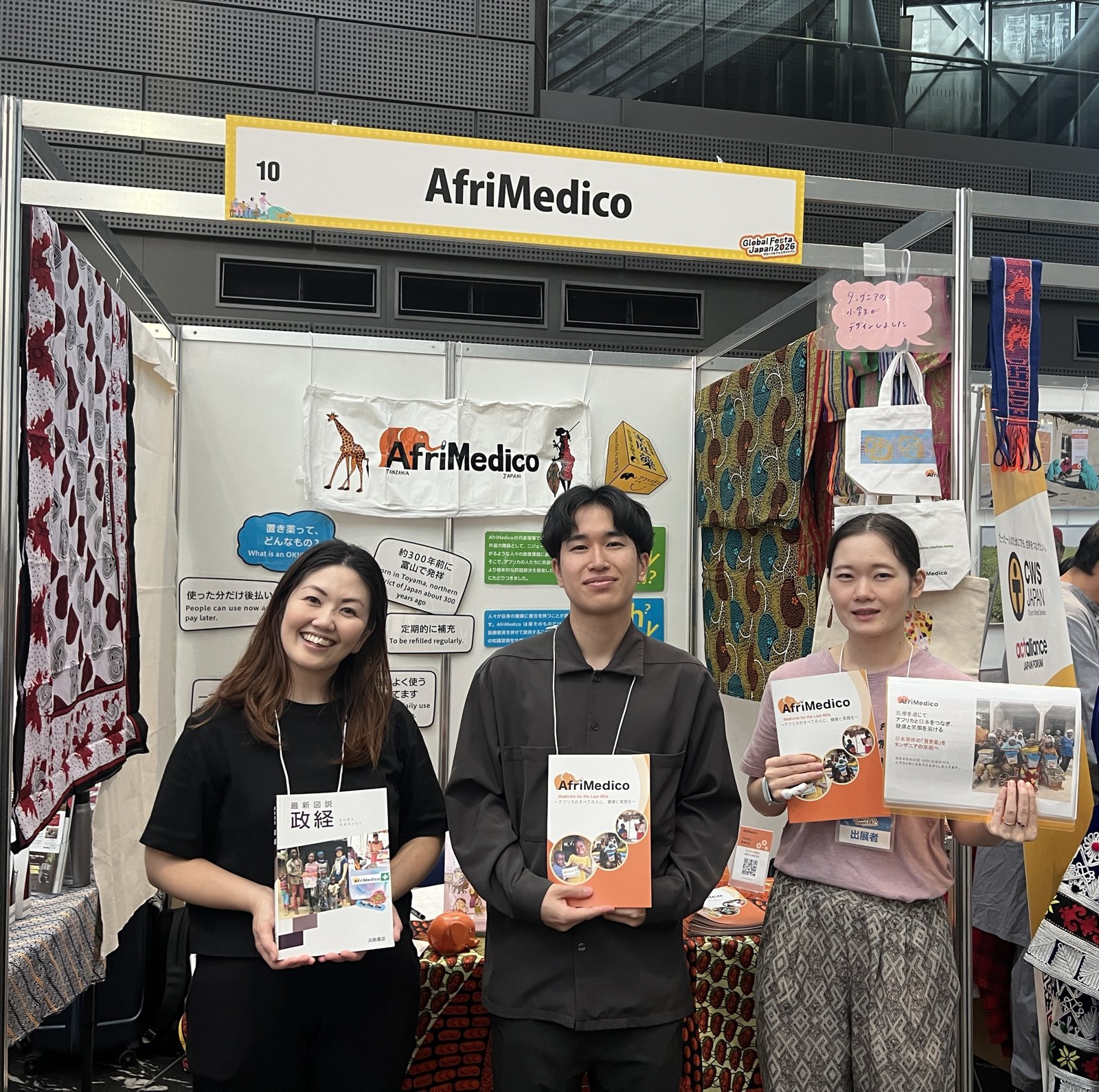
In rural Tanzania, hospitals are hard to reach and people often cannot get the medicine they need. AfriMedico, a nonprofit, tackles this by bringing health care and health education to villages through “okigusuri,” the traditional Japanese home-medicine-box system.
At Global Festa Japan 2026, we spoke with Ms. Maki Maeda, who works on the fundraising and communications team, about the results of the organization’s first ten years, voices from the field, and how we can help from Japan.
The reality of rural Tanzania, where access to health care is cut off
AfriMedico works mainly in rural Tanzania, where access to medical care is very poor and medicine often does not arrive when it is needed.
“In the rainy season the roads collapse, and it can take two or three hours to reach a medical facility. Even if you go to the nearest pharmacy, they may be out of stock.”
That is how Ms. Maeda describes the harsh infrastructure on the ground. AfriMedico places “okigusuri” medicine boxes in such villages and carries out medical and health education alongside, protecting residents’ lives and health.
Ten years of results, and the walls it still faces
AfriMedico has reached the ten-year mark since its founding. Ms. Maeda looks back on the journey:
“A recent happy moment was being able to share with our donors and supporting companies that together we have delivered this many results.”
Traveling to the field in person also lets the team see issues more concretely, she says, and gives them confidence to rebuild future project plans with care.
There are still many difficulties. Besides the challenge of communicating remotely between Japan and Tanzania, there are physical barriers: in the rainy season roads flood and visits to customers become impossible. To expand to more villages, a shortage of people, not just funds, is a major issue.
Everyone is a pro bono volunteer: many ways to take part from Japan
A defining feature of AfriMedico is that it has no paid staff. All members, including the board, hold other jobs and take part as “pro bono” volunteers who put their professional skills to use.
Ms. Maeda named the following ways those of us in Japan can help:
• Pro bono participation using your expertise: support with back-office work such as fundraising, communications, IT and finance.<br>• Joining research: helping verify “whether okigusuri is really useful on site.”<br>• Spreading the word on social media: reposting the organization’s posts so more people learn about its work.
The structure lets anyone take part directly from Japan in solving health issues in Africa, in a way that suits their strengths and lifestyle.
Connecting Africa and Japan, and heading to the next country
With the foundation of the okigusuri project in place to a degree, AfriMedico plans to begin surveys with other countries in mind, building on its track record in Tanzania. Toward its mission of “connecting Africa and Japan and delivering health and smiles,” its challenge is moving to the next stage.
Finally, Ms. Maeda had a strong message for the younger generation in Japan interested in international cooperation.
“Just try it first. I hope you will take up the challenge.”
If you are even a little interested, why not take that first step by following or sharing the organization on social media?
About the organization: AfriMedico
You can read an overview of AfriMedico in our NGO profile.
Read the NGO profile of AfriMedico → / Official website: https://afrimedico.org/
Interview information
Interview: NGO network Japan editorial team / Event: Global Festa Japan 2026 (booth no. 10) / Dates: October 17–18, 2026