
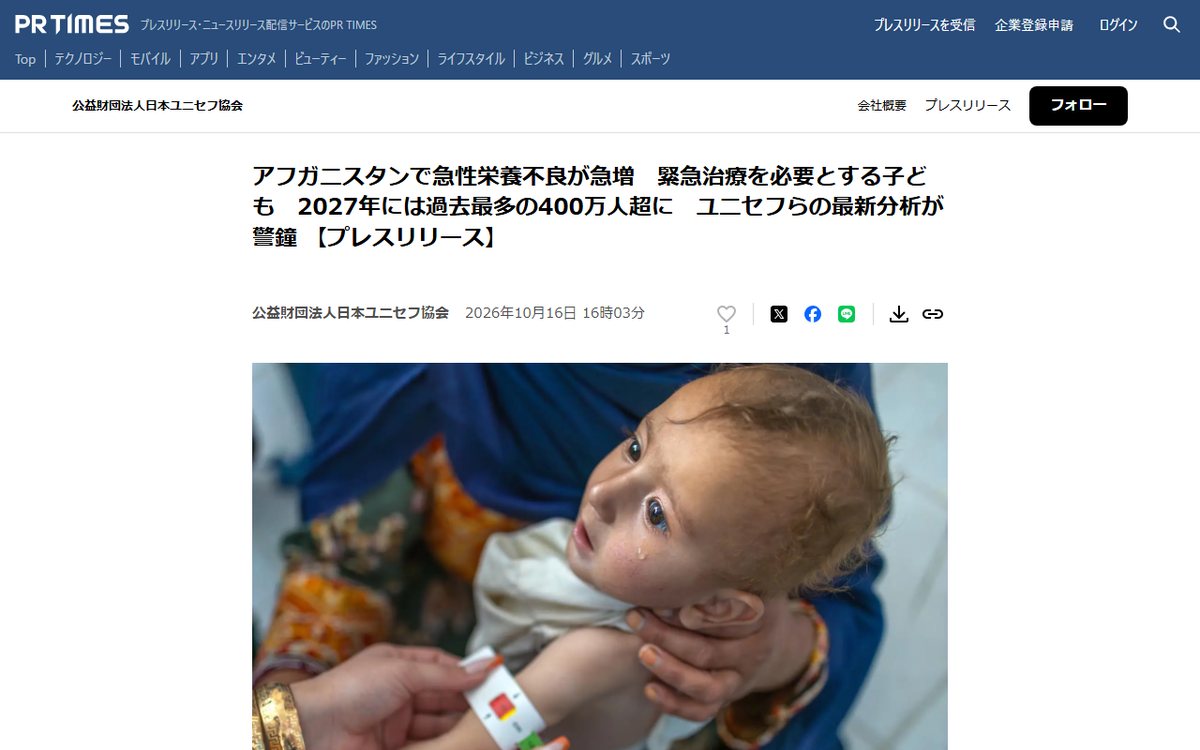
The Afghanistan Nutrition Cluster, which coordinates nutrition support in the country, is chaired and co-chaired by UNICEF and the international NGO Action Against Hunger. Its latest IPC analysis shows that more than 4 million children are expected to need treatment for acute malnutrition in 2027, the highest number in five years.
The number of provinces at critical levels of malnutrition is projected to rise from 7 in 2025 to 10 in 2026 and 14 in 2027, more than one third of all provinces. About 1.09 million children are projected to suffer severe acute malnutrition (up 16% from 2026), about 3 million moderate acute malnutrition, and around 1.3 million pregnant and breastfeeding women are also expected to be malnourished.
The release cites difficulty accessing nutritious food and safe water, repeated outbreaks of preventable diseases such as acute watery diarrhoea and measles, disrupted cross-border logistics delaying nutrition supplies, and a sharp decline in funding. Only one in three children aged 6 to 24 months receives an adequately balanced diet.
The head of UNICEF's Afghanistan office says that early response saves lives and that sustained, predictable investment is needed to keep nutrition, health, and water and sanitation services going.
Key points
- More than 4 million children expected to need treatment in 2027, the highest in five years
- Provinces at critical levels rise from 7 (2025) to a projected 14 (2027)
- Continued funding across nutrition, health, and water and sanitation is key
Why this news deserves attention
Concrete projections help us gauge the scale of support that will be needed. That a UN agency and an international NGO co-led the analysis also shows the size of the coordination effort on the ground.
The point that early detection and treatment save lives applies to everyday aid work as well. UNICEF's work is supported by donations, and taking an interest is a first step toward helping.
Editor's comment
Numbers can make this feel distant, but each one is a child's health. The release also reports children recovering after nutrition screening and therapeutic food, which suggests that early support makes a difference.
Please read the original release for the full analysis and photos from the field. Shall we think together about how each of us can help?