
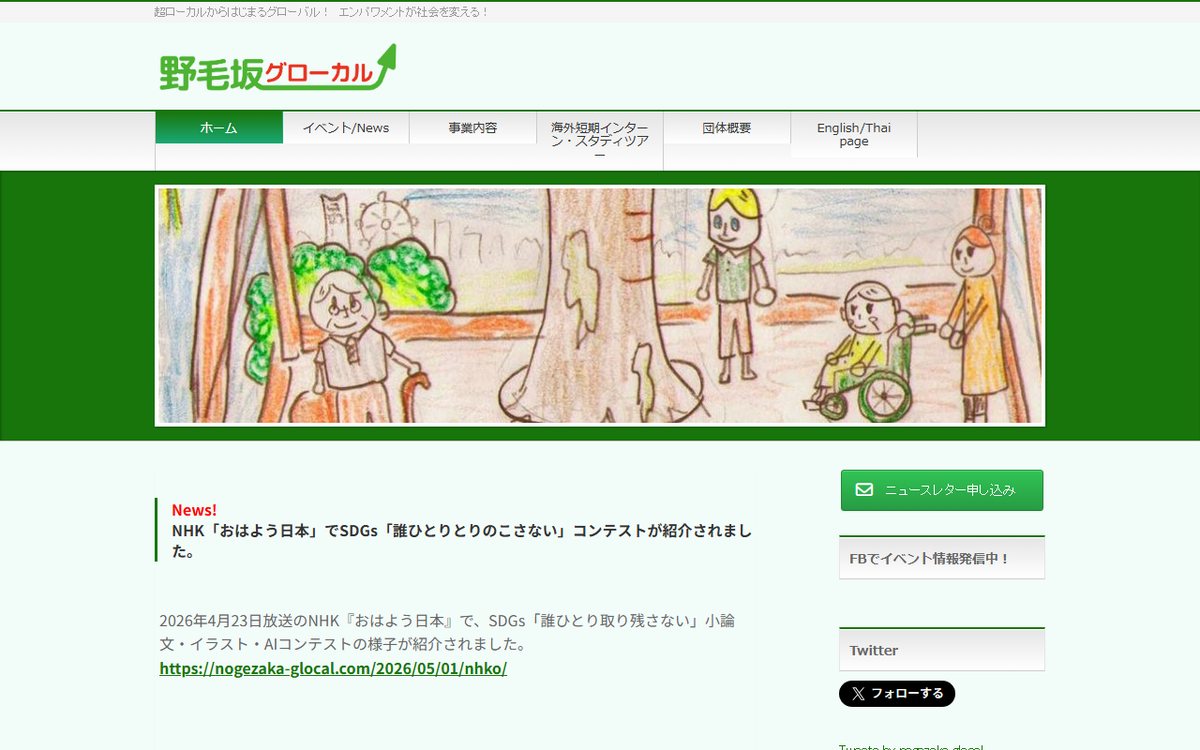
NOGEZAKA-GLOCAL is based in the Nogeyama area of Yokohama and aims to build multicultural local communities that leave no one behind. "Glocal" combines "global" and "local," and the group works through two kinds of mutual learning: among local communities within Japan, and between communities in Japan and overseas.
One of its main activities is the SMART & STRONG Project in Thailand, which spreads community-based integrated elderly care. It networks local governments, universities and private companies in Japan and Thailand, and by August 2023 the number of member municipalities in Thailand had grown to 26. The model has been recognized with the Asia Healthy Aging Innovation Award.
Another is a project that promotes schooling for the children of migrant workers who have come to Thailand from Myanmar and Cambodia. The group also runs the "Leave No One Behind" SDGs contest, which invites essays and illustrations from young people, along with overseas study tours for students, training and speaker dispatch, and research and consulting.
Key points
- "Glocal" activities built on mutual learning between communities in Japan and overseas
- Its elderly care network of Thai municipalities received the Asia Healthy Aging Innovation Award
- Opportunities for younger people, including an SDGs contest and study tours
Why this organization's work stands out
Its idea of learning from one another "without being conscious of borders," rather than separating domestic and overseas work, is distinctive. It draws on the wisdom of both Japan and Thailand to think about familiar issues such as elderly care and children's education.
It is also notable that the group sees multicultural coexistence as accepting many kinds of differences, including generation, gender and disability, not only nationality. Contests and study tours offer easy entry points for younger people.
Editor's comment
True to its slogan, "Global starts from the super-local," I was drawn to how local community building right at home connects with learning across the world.
Information on events and study tours is available on the official website. If you are interested in communities and multicultural coexistence, please take a look.