
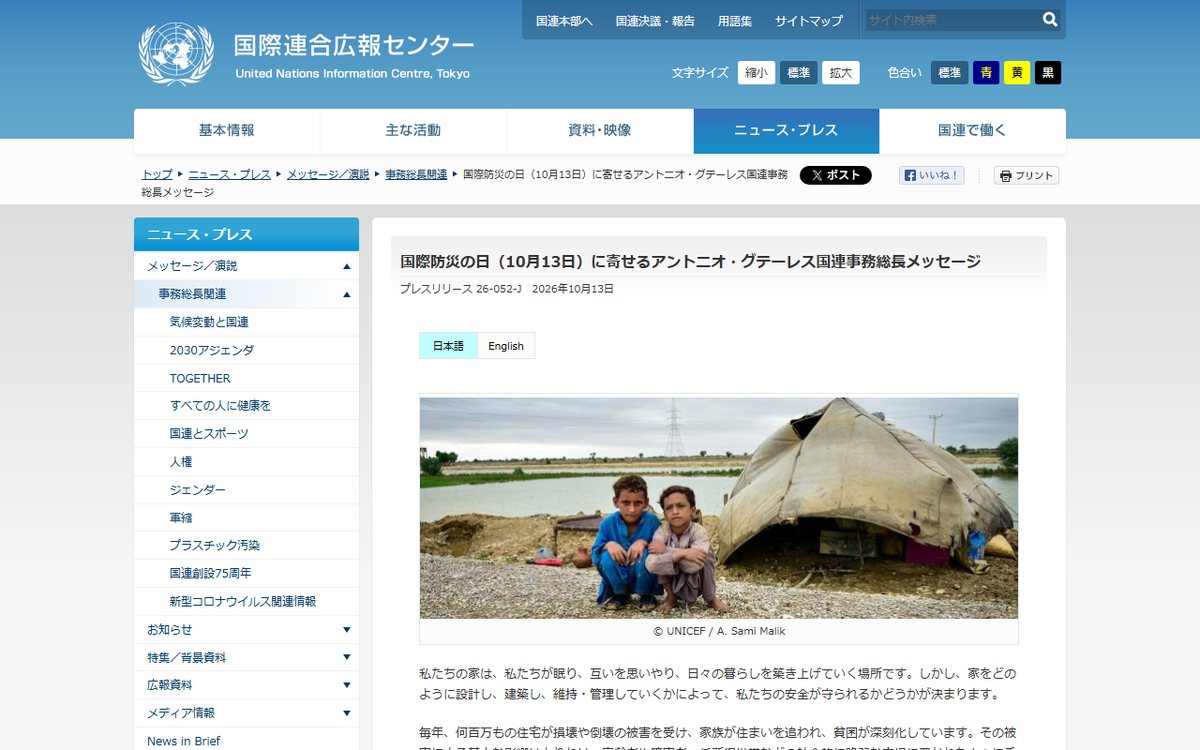
The message begins by noting that a home is where people sleep, care for one another and build their daily lives, and that how homes are designed, built and maintained determines whether we are safe. Every year millions of homes are damaged or destroyed, displacing families and deepening poverty.
The impact falls hardest on people who are already vulnerable, such as older persons, persons with disabilities and low-income households. Understanding risk, making plans and acting quickly at the household level can make the difference between life and death.
But households cannot do it alone. Governments must enforce risk-informed building codes and land-use planning; the private sector must invest in resilient construction and affordable insurance; and the commitment to early warning systems for all must be delivered. The message also calls for reform of the international financial architecture so developing countries can access the resources needed for disaster risk reduction.
Key points
- This year's theme puts disaster risk reduction at the starting point of daily life: the home
- Household preparedness is paired with the roles of governments, the private sector and the international community
- The message emphasizes older persons, persons with disabilities and low-income households
Why this news deserves attention
For Japan, with its earthquakes, typhoons and heavy rain, home safety concerns everyone. The message shows a view in which preparedness is supported by society as a whole, not left to individuals alone.
In international cooperation too, disaster risk reduction links humanitarian aid and development. Knowing global trends can prompt us to review our own preparations.
Editor's comment
When we think of disaster prevention, emergency kits and drills come to mind, but the safety of the house itself is easy to overlook.
Why not use this occasion to check your home's preparedness and your local hazard map once more?