
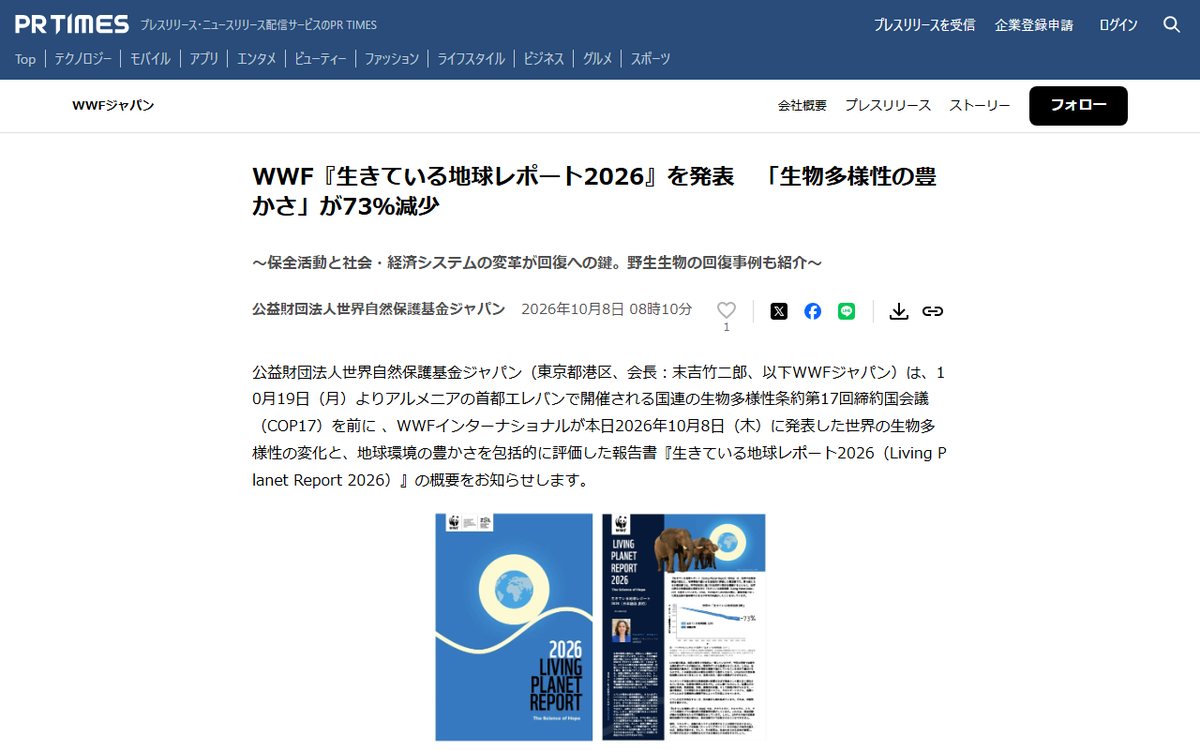

WWF International has released the Living Planet Report 2026, which summarizes changes in global biodiversity. Published by WWF since 1998, this is the 16th edition. The Living Planet Index, an indicator of biodiversity abundance, fell by an average of 73% over the 52 years from 1970 to 2022.
By ecosystem, freshwater fell the most (−85%), followed by terrestrial (−69%) and marine (−59%). The biggest driver is habitat loss and degradation, followed by overexploitation, climate change, pollution, invasive species and disease. The report points to structural problems in food, energy and financial systems behind these pressures.
It also presents signs of hope. Wild tiger numbers rose by more than 70% between 2010 and 2025, from about 3,200 to about 5,700. Recoveries are also noted for green sea turtles, bluefin tuna and elephants in southern Africa, showing that conservation can deliver results. The release comes ahead of the CBD COP17 in Armenia starting October 19.
Key points
- Wildlife populations down 73% on average over 52 years; freshwater down 85%
- Wild tigers recovered from about 3,200 to about 5,700 between 2010 and 2025
- COP17 opens October 19; accelerating transformation of social and economic systems is the challenge
Why this news deserves attention
Beyond the stark figures, the report shows recoveries that came from long-term cooperation among governments, local communities and NGOs — lessons we can learn from.
WWF Japan comments that society needs to shift toward systems that reward protecting and restoring nature. It is a topic that connects to everyday life and choices.
Editor's comment
The 73% figure is startling, but the tiger's recovery shows that cooperation can change the situation.
Let's follow the COP17 discussions in October with interest. For details, please see WWF Japan's announcement.